
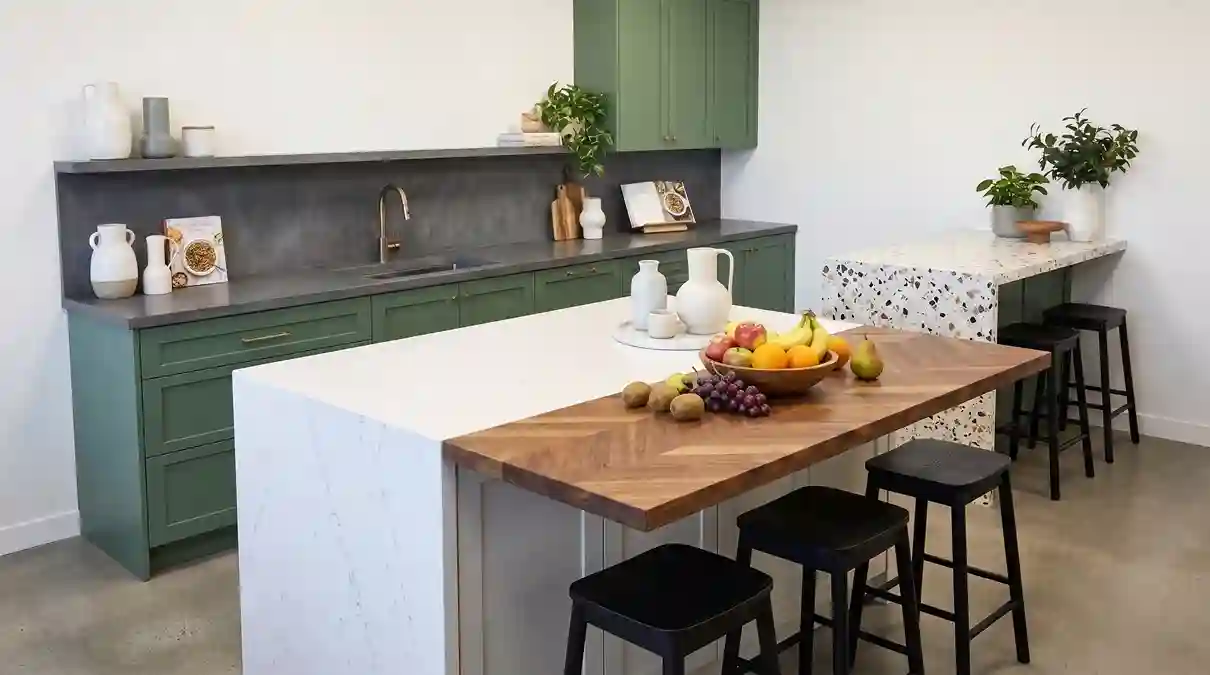
15 Kitchen Countertops Organization Ideas for Clear, Useful Workspaces
Kitchen counters can become crowded without anyone making a deliberate mess. The coffee machine stays out, a few bottles collect beside the stove, mail lands near the door, and small appliances slowly take over the places meant for chopping and serving. A useful counter should support daily routines first, so organization starts by deciding what really needs to stay within reach.
Practical kitchen countertop organization is based on use, not on hiding everything. This guide focuses on keeping everyday items easy to reach while protecting enough open countertop for food preparation, cleaning and serving. If you are working with a compact rental or student setup, our small dorm room decorating ideas use the same small-space principle of giving every frequently used item a clear home.
15 Kitchen Counter Organization Ideas That Help Protect Prep Space
These kitchen countertop organization ideas work best when you make one change at a time and watch how it affects your normal routine. Start with the busiest part of the room, then adjust storage around the tasks you do every day rather than buying organizers before you know what problem they need to solve.
1. Empty the Counter Before You Decide What Stays
Take everything off one section of the counter and clean the surface before putting anything back. Seeing the counter empty makes it easier to notice how much working room has been lost to objects that simply settled there. Sort the removed items into daily use, occasional use, and items that belong somewhere else.
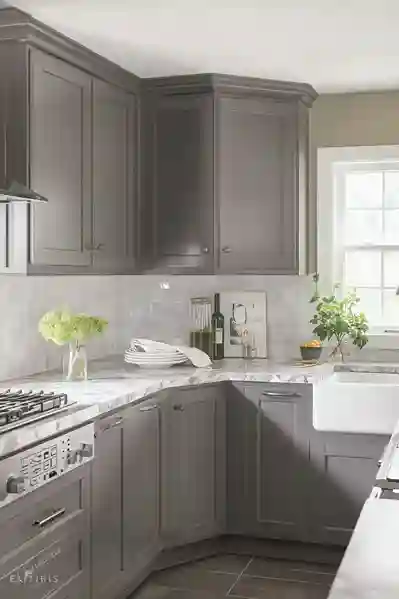
Return the daily items first and stop when the counter still has comfortable working space. A blender used twice a month can live in a cabinet, while a coffee maker used every morning may deserve a permanent place. This first edit also shows whether the real problem is the counter or an overcrowded drawer or cabinet nearby.
2. Build Small Work Zones Around Real Tasks
Divide the counter by activity instead of treating it as one long storage shelf. A prep zone needs open space and easy access to knives and cutting boards. A cooking zone may need oil, salt and utensils near the stove. A drink zone can hold the kettle, coffee maker or mugs if those items are used every day.
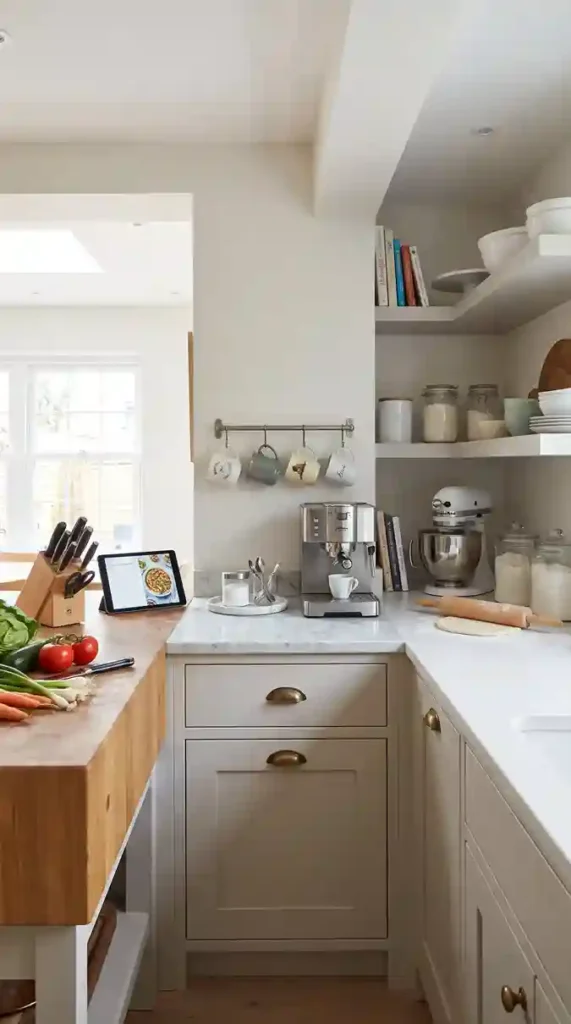
Keep each zone compact enough that one activity does not spread into another. In a narrow kitchen, even two clear zones can make a difference. The aim is not to label the room formally, but to shorten the distance between an item and the task it supports so putting it away feels natural.
3. Keep Only Daily Appliances on the Worktop
One of the simplest ways to organize kitchen countertops is to question every appliance that lives on the counter. A toaster, coffee maker or electric kettle may earn the space if it is used most days. A stand mixer, food processor or large blender may be better stored nearby if it only comes out occasionally.
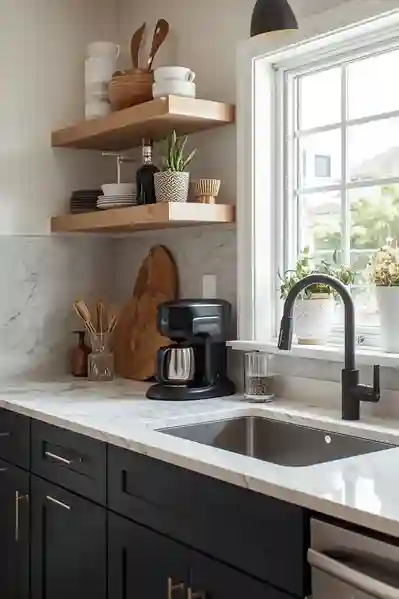
Think about access as well as appearance. Heavy appliances should not be stored so high that lifting them becomes awkward, and frequently used machines should have enough space for safe operation and easy cleaning around them. If a cabinet is deep, a pull-out shelf or low shelf can make occasional appliances easier to reach without leaving them on display.
4. Create a Proper Landing Spot for Mail, Keys and Chargers
Paper, keys, sunglasses and charging cables often create clutter because they arrive in the kitchen but do not actually belong to cooking. If the kitchen is the natural entry point for your household, give these items one small landing place instead of allowing them to spread across the counter.
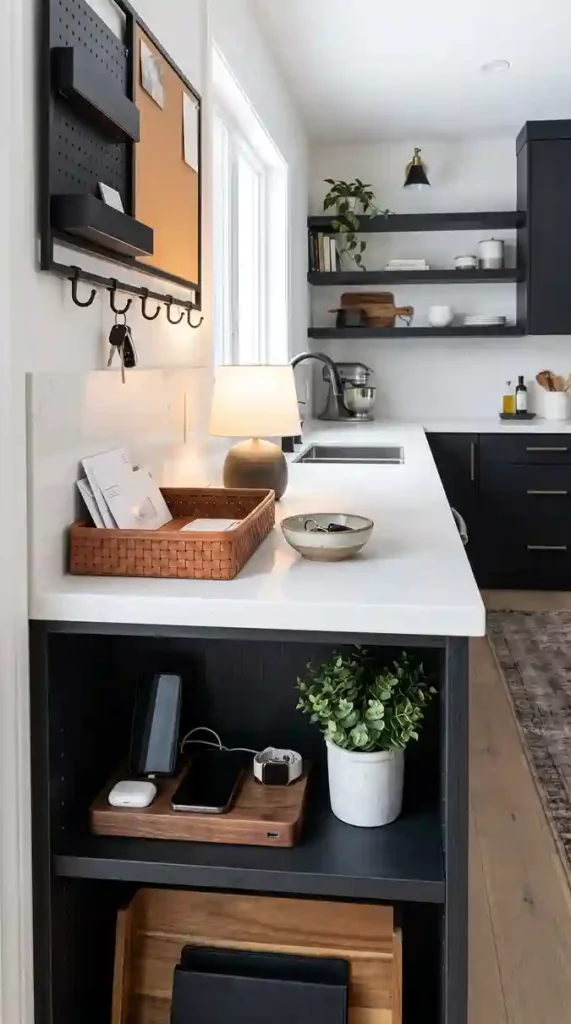
A shallow tray, wall pocket or small basket near the entrance can contain short-term items. Keep it away from the main prep area and clear it regularly. If paperwork tends to stay for days, move the long-term storage to a desk, drawer or file elsewhere so the kitchen does not become a holding area for unfinished household tasks.
5. Group Cooking Oils and Seasonings on One Tray
Bottles beside the stove are easier to manage when they are treated as one group. Place the few oils, vinegars or seasonings you use often on a washable tray rather than lining containers across the whole backsplash. The tray creates a visual boundary and makes the area easier to lift and wipe underneath.
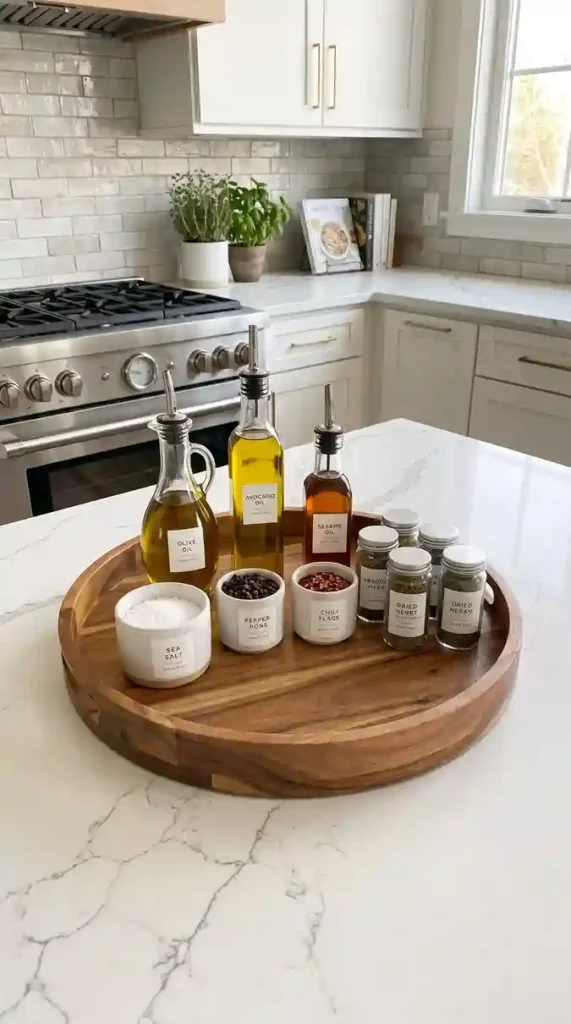
Choose a tray that fits the available depth without taking over the worktop. Avoid keeping more bottles out simply because there is room on the tray. Heat and splashes also matter, so do not place oils or other ingredients where a hot surface or direct heat can affect them. Keep less-used bottles in a cabinet or pantry.
6. Store Utensils Vertically, but Keep the Crock Edited
A utensil crock can free up drawer space and keep cooking tools close to the stove, but it stops helping when it becomes packed with duplicates. Keep only the tools you reach for often, such as a wooden spoon, spatula, ladle or tongs, and move specialty tools back to a drawer.
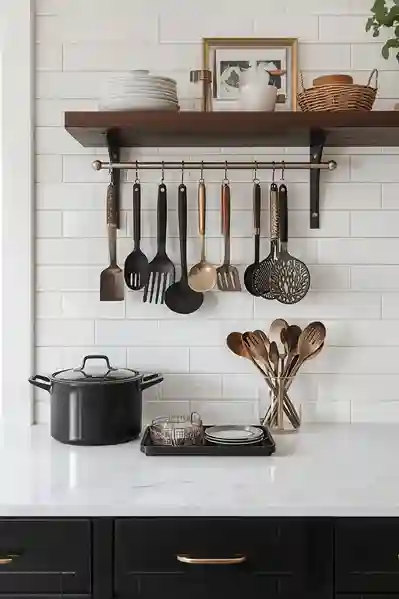
Use a stable container with enough weight that it will not tip when one tool is removed. Position it where handles do not interfere with burners or passing traffic. If you have adequate drawer space, a divided drawer may create an even cleaner counter, so choose the option that fits your storage rather than assuming utensils must stay visible.
7. Use Walls and Backsplashes for Light, Everyday Storage
When base cabinets are limited, vertical storage can help keep kitchen countertops clear. A rail for frequently used tools, a properly fixed magnetic knife holder, or a slim wall shelf can move selected items off the counter while keeping them easy to reach.
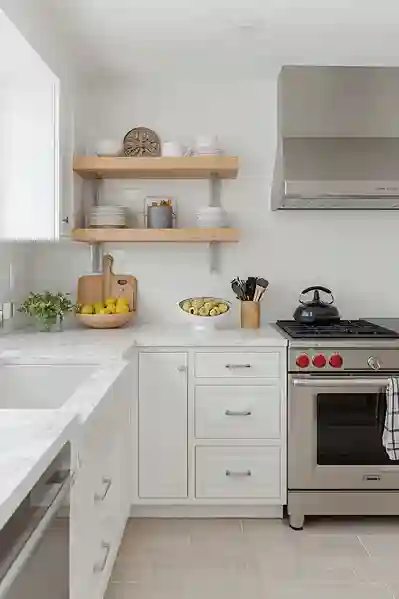
Use this approach selectively. Too many hanging objects can make a small kitchen feel busier than a few well-placed counter items. Renters can use removable solutions where suitable for the surface, while permanent rails and shelves should be fixed securely and positioned so stored items do not interfere with cooking, doors or walkways.
8. Stand Cutting Boards and Trays Upright
Cutting boards, baking trays and serving boards use less counter width when stored vertically. A narrow divider, rack or deep cabinet slot keeps them separated so you can pull out one piece without moving a full stack. This is especially useful when boards are used daily but a large flat pile would occupy valuable worktop space.
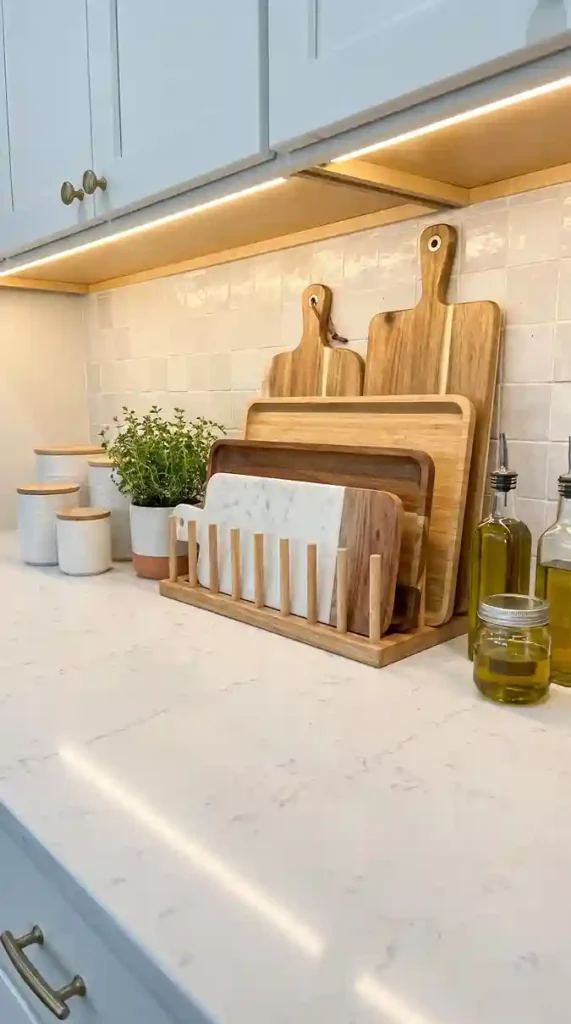
Keep everyday boards close to the main prep zone and move larger serving pieces to less convenient storage. Allow washed boards to dry fully before placing them into tight storage, particularly wooden boards. If you like the look of one board against the backsplash, keep the display limited so it does not become a row of decorative pieces blocking usable depth.
9. Make the Coffee or Tea Area Self-Contained
A drink station works best when the items used together sit together. Place the coffee maker or kettle near the mugs, coffee, tea and sugar instead of spreading those items between several parts of the kitchen. A small tray or nearby drawer can hold the loose pieces without turning the whole counter into a beverage display.
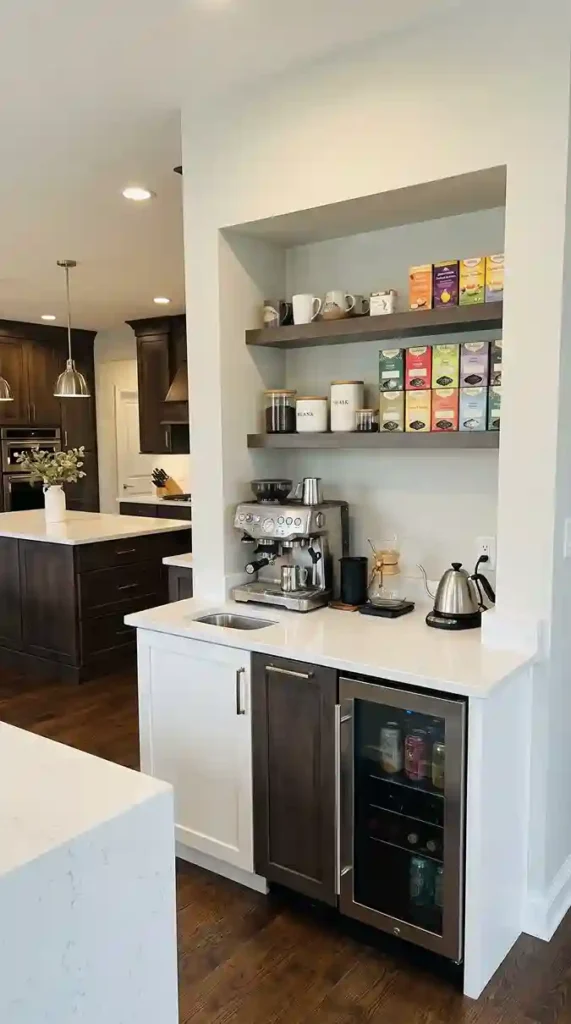
Check the station against your morning routine. If you need to cross the kitchen for spoons, filters or mugs, move those items closer. Keep enough open space around hot appliances for safe use and cleaning. In a very small kitchen, the station may be no more than one appliance on the counter with supplies stored in the cabinet directly above it.
10. Use a Turntable for Small Bottles and Jars
A compact turntable can be a tidy option when several small containers are used in the same place. It works well for cooking condiments, coffee add-ins or other items that would otherwise form two or three uneven rows at the back of the counter.
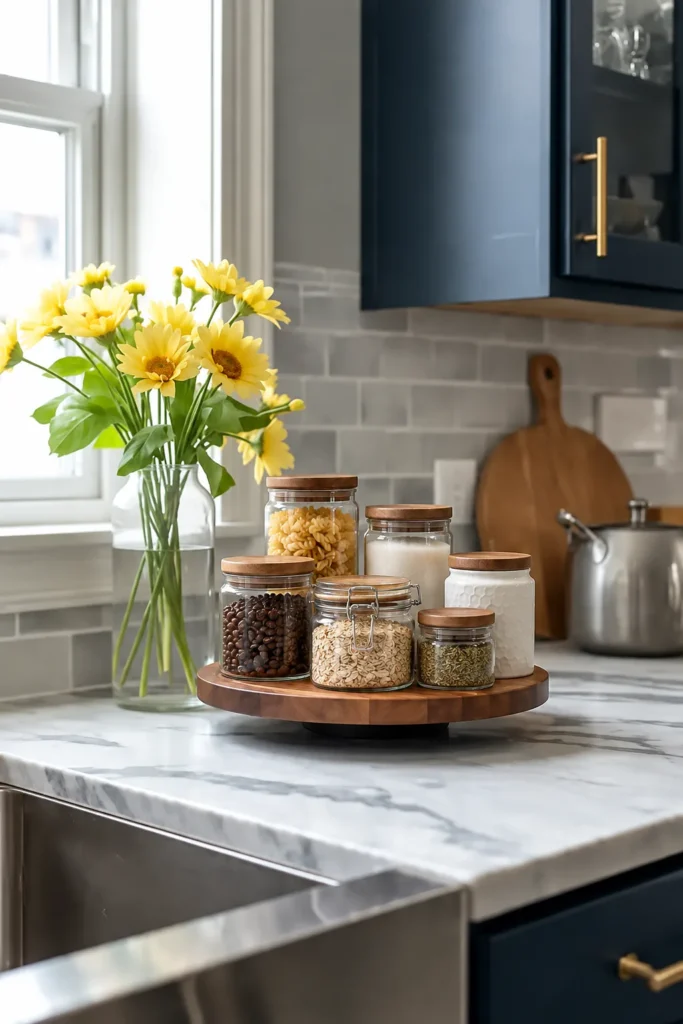
Choose one that fits the depth of the surface and can be wiped easily. Do not use it as permission to keep every jar out. The benefit comes from making a small set easier to reach and return. If the group grows beyond the turntable, move less-used items into a cabinet and keep the counter version limited to current essentials.
11. Give Fruit One Defined Footprint
Fruit bowls can be useful, but oversized bowls and multiple produce containers can quickly consume prep space. Choose one bowl, basket or tiered stand sized to the amount of fruit your household normally keeps at room temperature. A taller form can use less counter width than a broad shallow bowl.
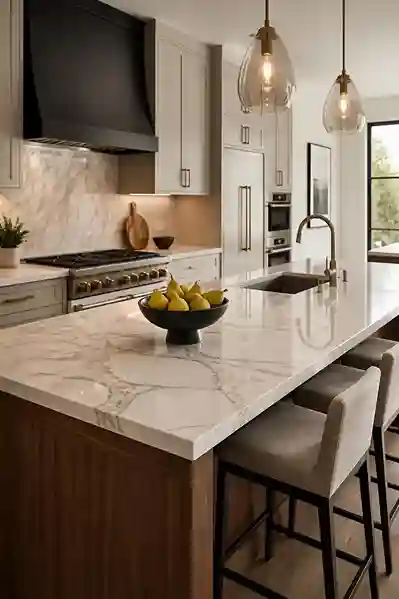
Place it outside the main chopping area and away from heat sources. If fruit often overfills the container, the answer may be to buy smaller amounts more frequently or store suitable produce elsewhere. The goal is a contained food zone that is easy to check and clean, not a decorative pile that expands across the counter.
12. Use Corners for Compact Storage, Not Random Extras
Counter corners often become dead space because they are awkward to reach. A small tiered shelf, corner rack or carefully sized canister group can make that area useful without pushing storage into the main prep lane. Corners are better for items you need regularly but not constantly.
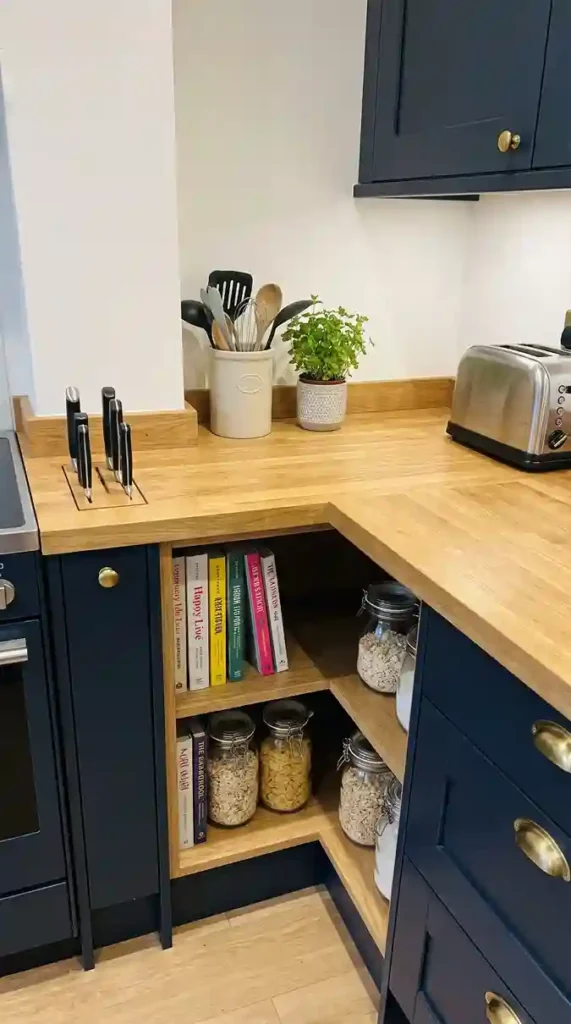
Measure the corner before buying anything. Tall organizers can block upper cabinet doors, outlets or light, while deep organizers can make the back items difficult to clean. A simple low riser may be enough to separate two levels of small items. Keep the front edge of the counter open whenever possible so the kitchen still feels workable.
13. Move Seldom-Used Appliances Into Accessible Storage
If you want more open surface, do not just relocate appliances to the hardest cabinet in the room. Good storage should make occasional use realistic. A lower cabinet, pantry shelf, appliance garage or sturdy pull-out can keep larger machines off the counter without turning them into a lifting problem.
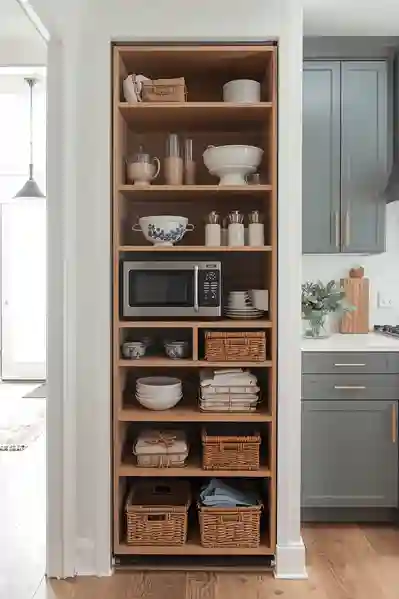
The best kitchen countertop setup depends on your habits. Someone who bakes every weekend may need a mixer close by, while another household may use that space better for a toaster. Store by frequency and weight, not by category alone. The system should make returning the appliance almost as easy as leaving it out.
14. Keep the Sink Zone Narrow and Easy to Wipe
The sink area can collect soap bottles, brushes, cloths, sponges and cleaning products faster than almost any other section. Reduce the group to what is used every day and contain it in a narrow washable caddy or tray. Store refills and specialty cleaners under the sink or in another suitable cabinet.
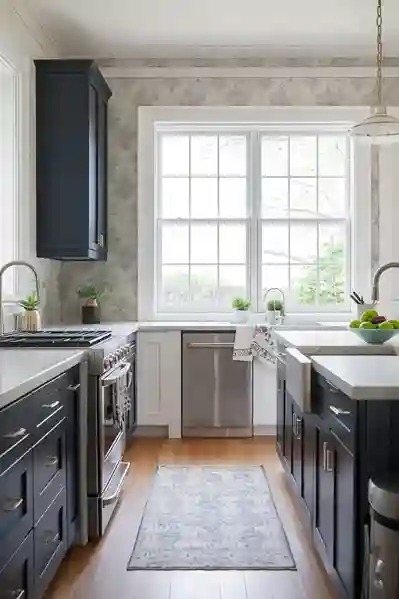
Leave the surrounding counter as open as possible so water can be wiped up quickly. Wash or replace the holder when residue builds up, and let wet tools dry properly. If you use hand soap and dish soap, matching bottles are optional. Clear labeling and easy handling matter more than making every container look identical.
15. Finish With a Five-Minute Counter Reset
Organization lasts longer when the counter has a simple reset point. At the end of the day, return stray items, move dirty dishes to their proper place, wipe the main work surface and check the small trays or zones for anything that has drifted in. The routine should be short enough to repeat without turning into a full kitchen clean.
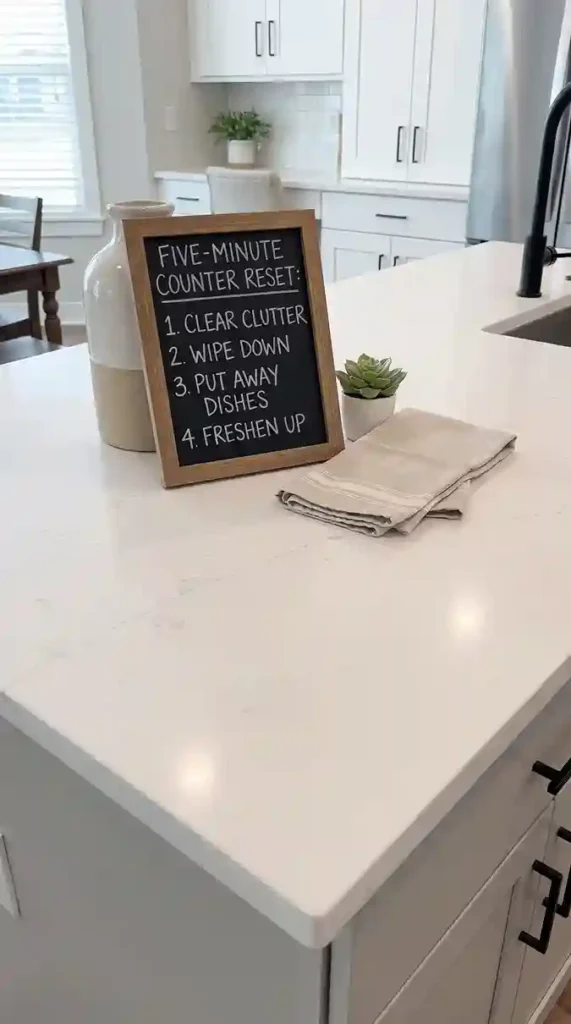
A reset also shows where the system is failing. If the same object is out every night, it may need a better storage home. If one zone constantly overflows, reduce what it holds or move part of the activity elsewhere. A kitchen stays organized through small corrections, not through one perfect setup.
How to Keep Kitchen Counters Organized in a Small or Busy Home
The most useful kitchen countertop systems protect open work space before they add storage. In a small room, leave the clearest stretch of counter for food preparation and move storage toward the edges, walls or cabinets. Choose narrow trays, vertical holders and compact stations only when they solve a specific problem. More containers can create another layer of clutter if the items inside them do not need to be on the counter.
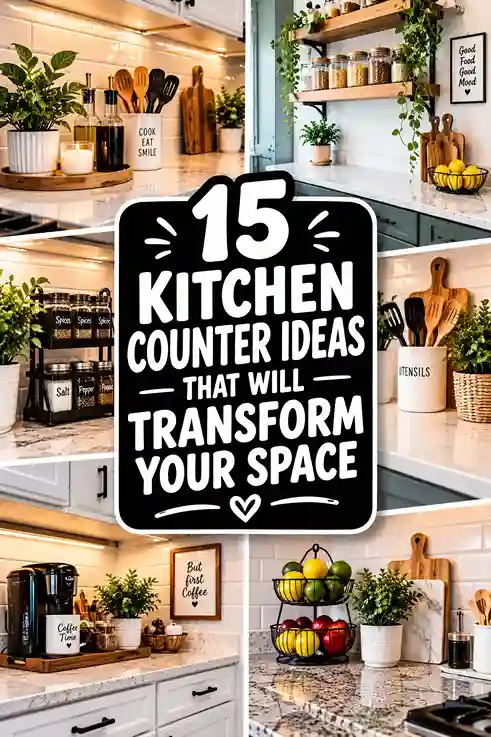
Make the system easy for everyone who uses the room. Daily items should have obvious homes, occasional items should still be reachable, and non-kitchen clutter should have another destination. If you need more ideas for fitting useful storage into very limited square footage, our small dorm room decorating ideas show how small spaces can work better when each item has a defined place and open surfaces are protected.
Conclusion
Well-organized kitchen countertops make the space easier to cook on, easier to clean and easier to reset. Start by removing what does not belong, then build small zones around the appliances and tools you actually use. Keep enough empty surface for real work and adjust the system when your routines change. A clear counter does not need to look empty. It simply needs to make everyday kitchen tasks easier.
FAQs
What should stay on a kitchen counter?
Keep items that are used most days and are awkward to store elsewhere, such as a coffee maker, kettle, a small utensil crock or a compact group of cooking essentials. The exact list depends on your routine and available cabinet space.
How can I organize a kitchen counter with very little storage?
Use the walls and cabinet interiors carefully, store boards and trays vertically, keep appliances limited to daily use and give small items one contained zone. One practical way to keep kitchen countertops organized is to protect a clear prep area first, then fit storage around it.
Should small appliances be kept on the counter?
Only if they are used often enough to justify the space. Daily appliances can stay out if they do not crowd the work area. Occasional appliances are usually easier to manage in an accessible cabinet, pantry shelf or appliance garage.
How do I stop mail and keys from collecting in the kitchen?
Give them one small landing place near the entry point and clear it on a regular schedule. If papers need to stay longer, move them to a desk, file or drawer outside the food-preparation area.
How often should kitchen counters be reset?
A short daily reset is usually easier than waiting for clutter to build. Return stray items, deal with dishes, wipe the work surface and remove anything that has moved into a zone where it does not belong.


One Comment