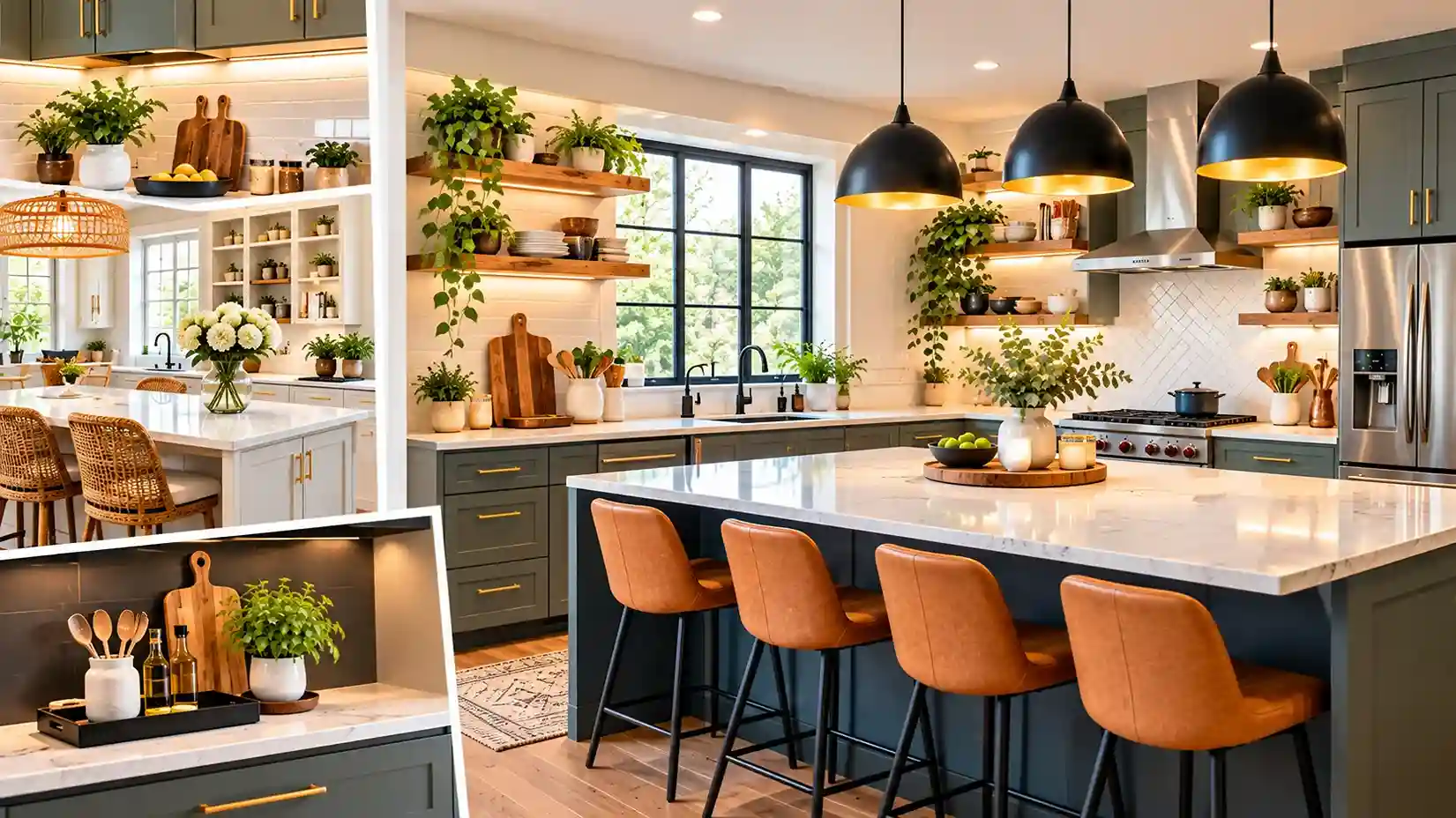
19 Kitchen Styling Ideas That Make Everyday Spaces Feel Finished
A kitchen can have good cabinets and a sensible layout yet still feel unfinished. Empty walls, crowded counters, harsh lighting and random accessories can pull attention away from the parts of the room that already work.
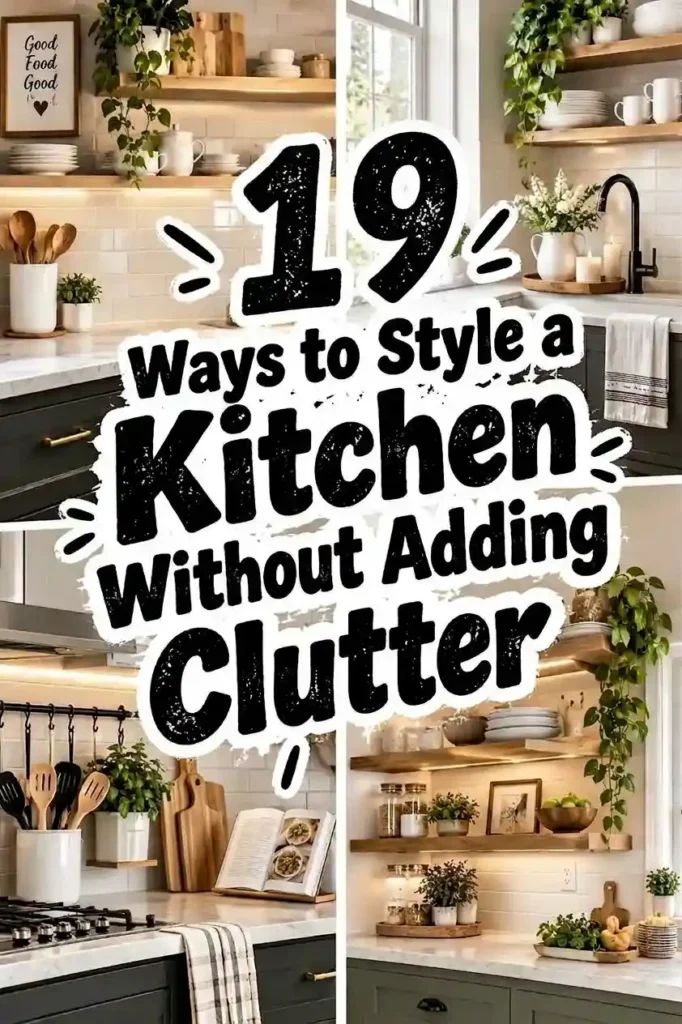
These Kitchen Styling Ideas focus on the layer that comes after the main design decisions: what stays visible, how useful objects are grouped, where texture and color appear, and how to add character without sacrificing prep space. Most can be adapted without a major remodel.
20 Ways to Style a Kitchen Without Adding Clutter
The most useful Kitchen Styling Ideas start with function. Keep the areas used for chopping, washing and cooking clear first, then style the quieter edges of the room with a limited mix of useful objects, natural materials and personal details.
1. Clear the Working Surfaces Before You Add Decor
Styling is easier when the counter is not already carrying items that belong elsewhere. Remove loose papers, occasional appliances and duplicate containers, then look at how much open surface is actually available. A clear work zone gives the remaining objects more visual weight without adding anything new.
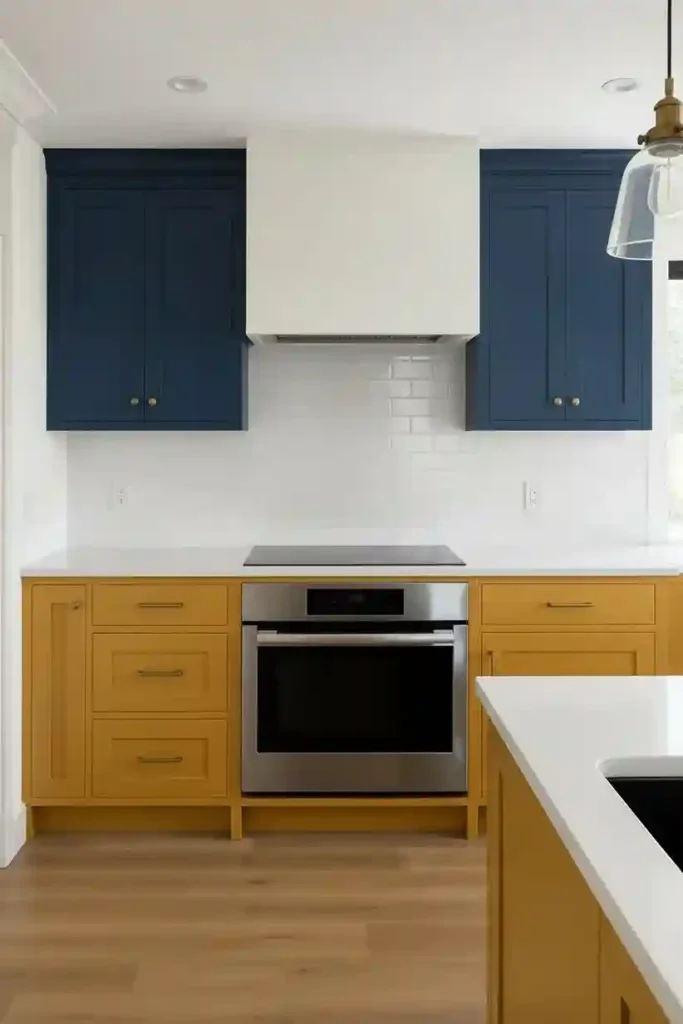
Return only what supports a daily routine or earns its place visually. A coffee maker used every morning may stay, while a mixer used twice a month can move to accessible storage. Leave breathing room around each group so the counter still works for food preparation and cleaning.
2. Build One Small Tray Around a Daily Routine
A tray can turn several loose items into one controlled group. Use it for oil and salt near the range, coffee supplies beside the machine, or soap and a brush near the sink. The boundary helps the arrangement read as intentional instead of scattered.
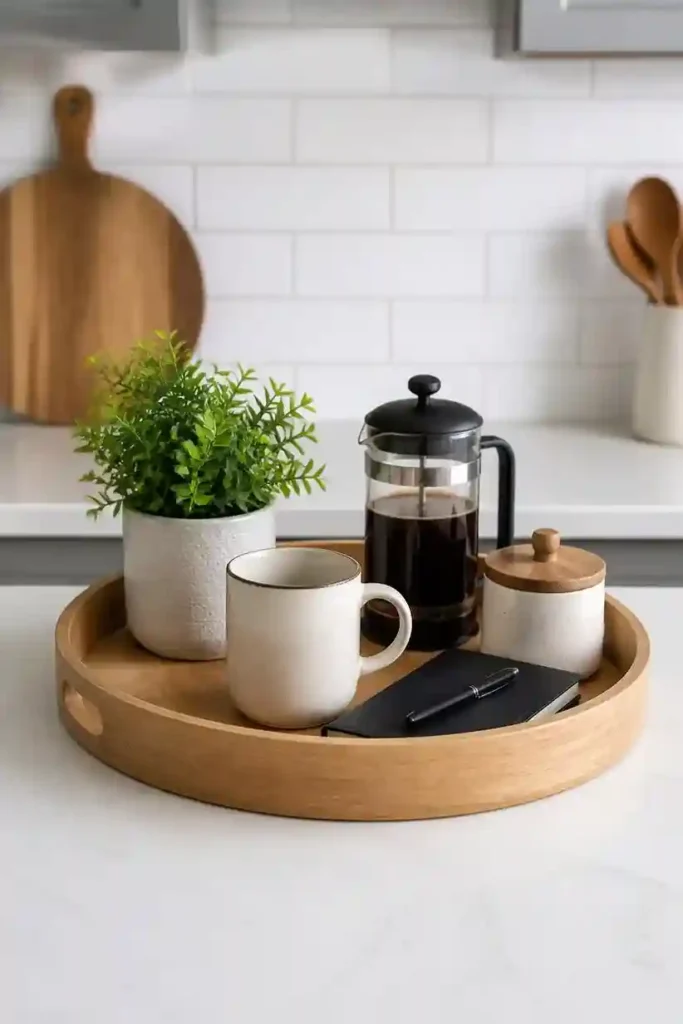
Choose a washable tray that fits the available depth and keep the contents limited. If the tray begins to hold unrelated items, edit it rather than buying a larger one. Wood, stone, ceramic or metal can work, but the finish should relate to materials already present in the room.
3. Lean Cutting Boards Where They Are Used
Wooden cutting boards can add warmth to a hard kitchen while remaining useful. One or two boards leaned against a backsplash create height and texture, especially beside stone, tile or painted cabinetry. Their natural grain can also soften a very smooth or monochrome palette.
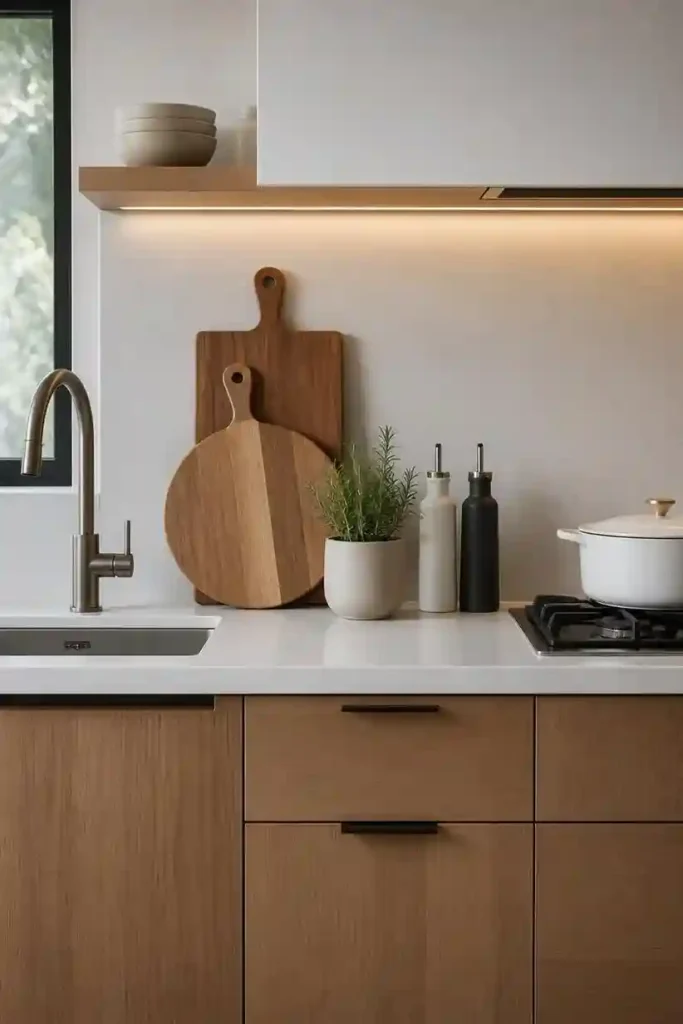
Keep the display close to the prep area and avoid creating a wide row that blocks the back of the counter. Let washed boards dry fully before placing them against a wall, particularly solid wood boards. If grease and splashes are common behind the range, move the arrangement to a cleaner zone.
4. Use One Good-Looking Vessel for Everyday Utensils
A utensil crock works best when it holds the tools used most often rather than every spoon and spatula in the drawer. A simple ceramic, stoneware or metal vessel keeps useful pieces within reach and gives the cooking zone a small vertical accent.
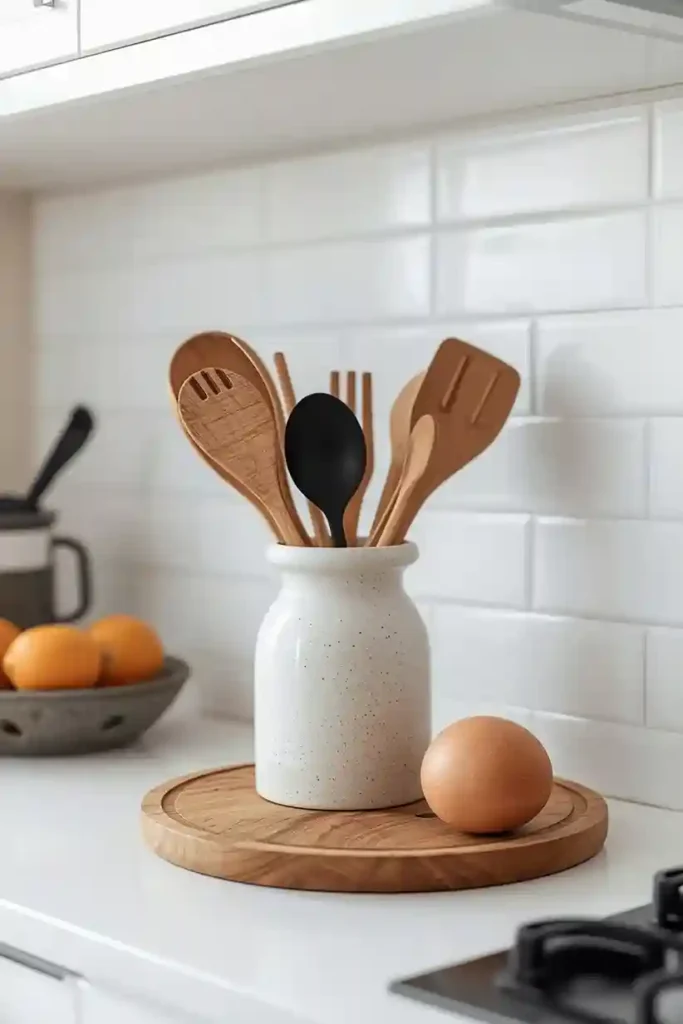
Edit the contents so handles are easy to separate and the container does not look overfilled. Place it far enough from burners that handles, grease and heat do not become a problem. If drawer storage is generous, keep only a few attractive wooden or metal tools visible and store the rest.
5. Give Fruit and Produce a Defined Place
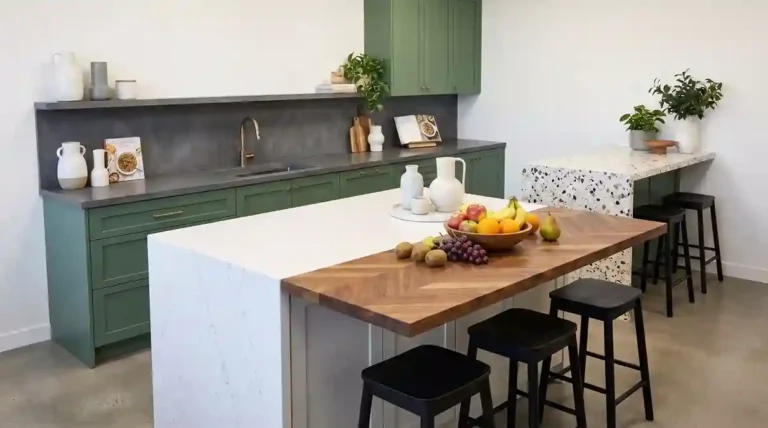
Among practical Kitchen Styling Ideas, a single fruit bowl or basket works because it combines storage with color and shape. Produce can bring a changing natural element to the room without relying on objects that serve no purpose.
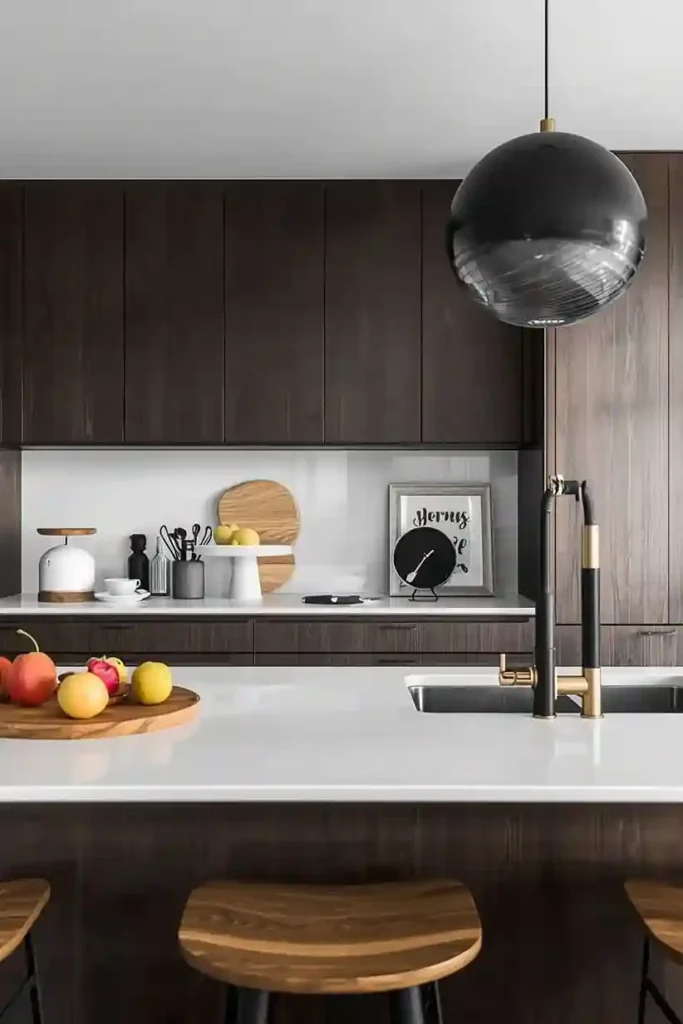
Choose a container sized to the amount your household normally keeps at room temperature. A broad bowl suits a large island, while a taller basket uses less counter width in a small kitchen. Keep it away from direct heat and avoid letting the display spread into the main prep space.
6. Style Open Shelves With Things You Actually Use
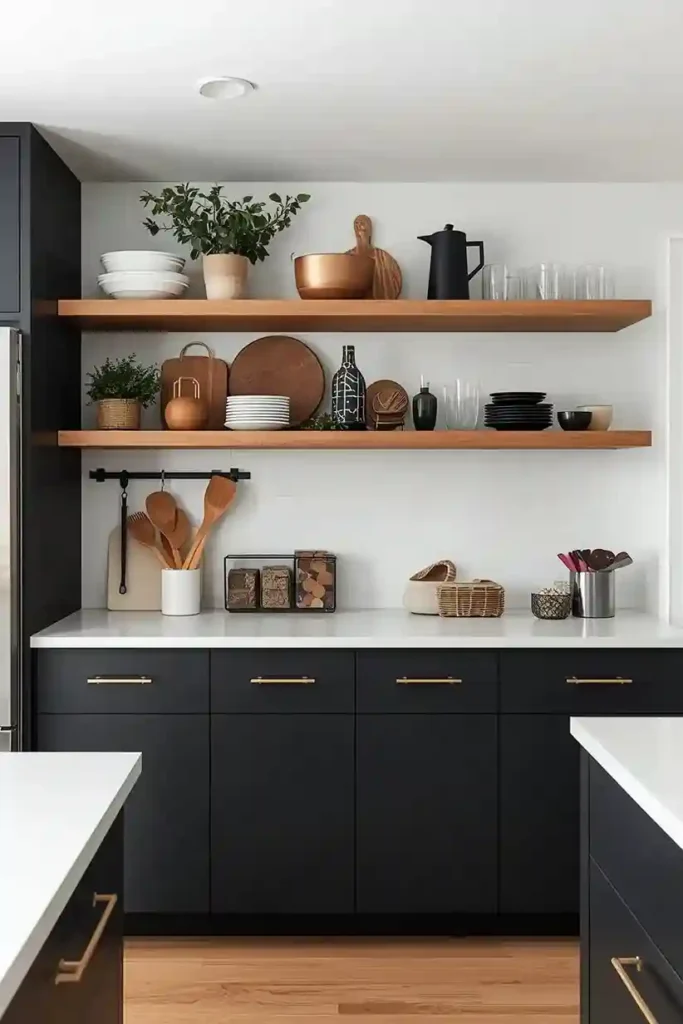
Open shelves look calmer when everyday plates, bowls, glasses and a few useful accessories do most of the visual work. Repeating a limited range of colors or materials helps separate pieces feel related without making the display too formal.

Khalil Ur Rehmankhalil.rehman0807@gmail.comEdit Profile
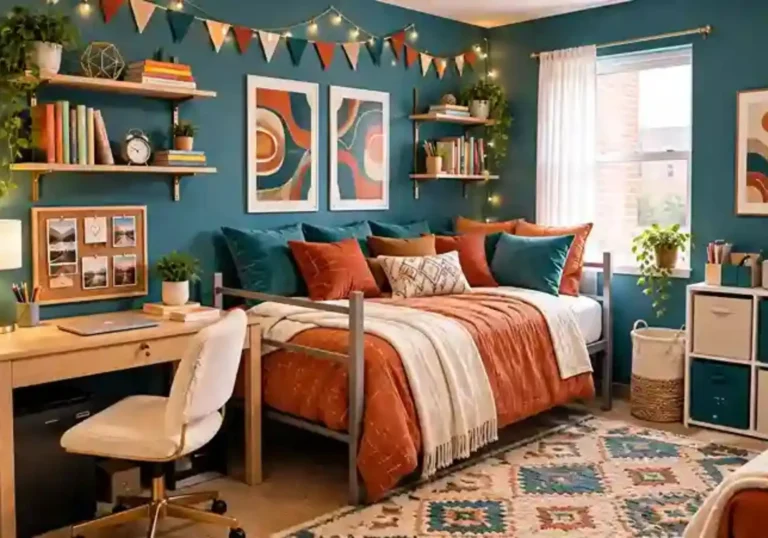
Leave part of each shelf empty and vary height with a small stack, a taller jug or one framed piece. In a compact kitchen, the same restraint used in cute dorm decorations can help: fewer items, clear grouping and enough open space to keep the surface readable. Store rarely used pieces behind doors if dust or grease is a concern.
7. Add Art Away From Heat and Splash Zones
Art can make a kitchen feel connected to the rest of the home. A framed print, small painting or textile piece works well near a breakfast area, on an end wall, above a low cabinet or beside a doorway where it is visible but not exposed to cooking mess.
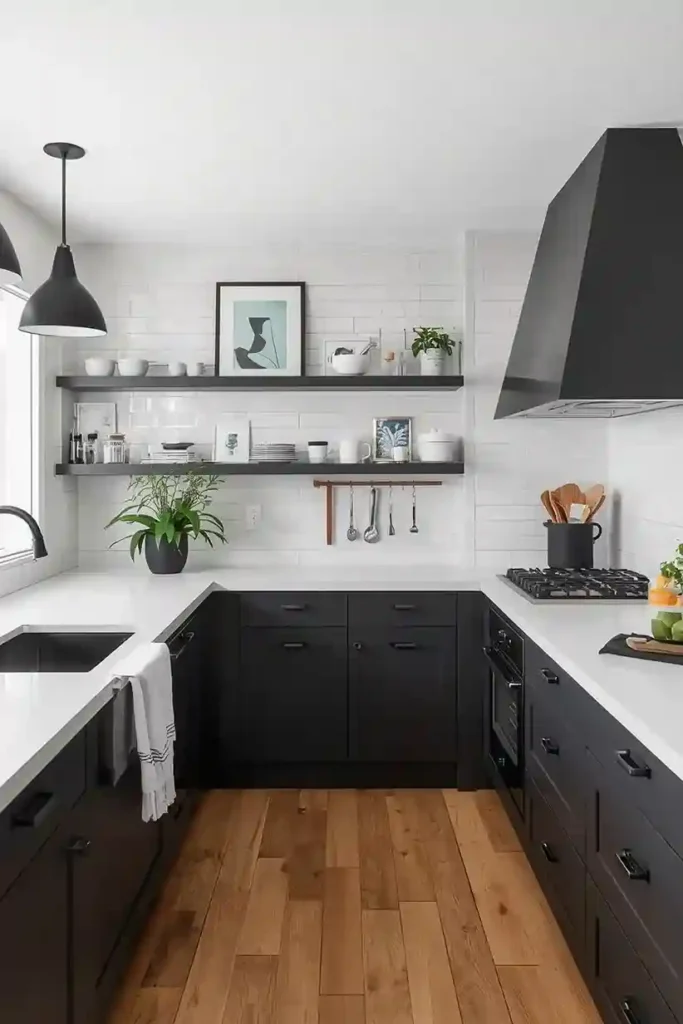
Scale the piece to the wall rather than choosing something simply because it is kitchen themed. One confident work often looks better than several small signs. Avoid placing valuable or moisture-sensitive pieces directly above a sink, range or kettle where heat and steam can shorten their life.
8. Use a Small Lamp to Soften Evening Light
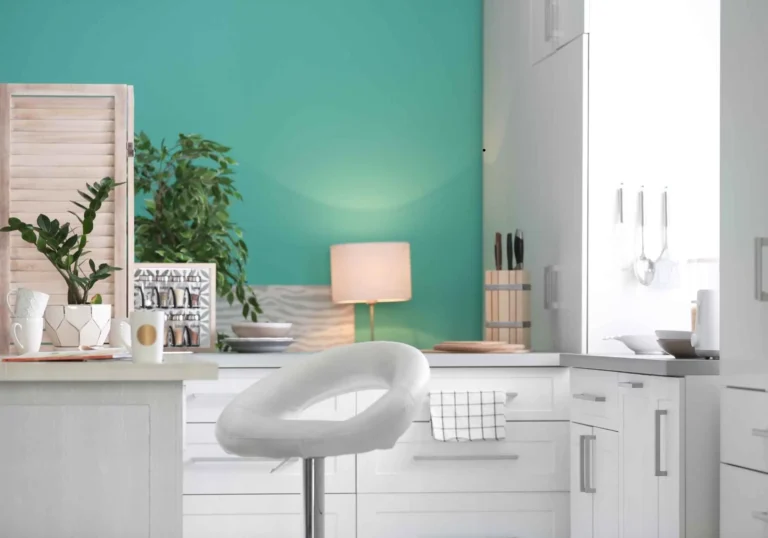
A compact table lamp can make a kitchen feel less dependent on bright ceiling fixtures after the main cooking is finished. It works especially well on a side counter, open shelf, breakfast nook or hutch where it can add a lower pool of light.
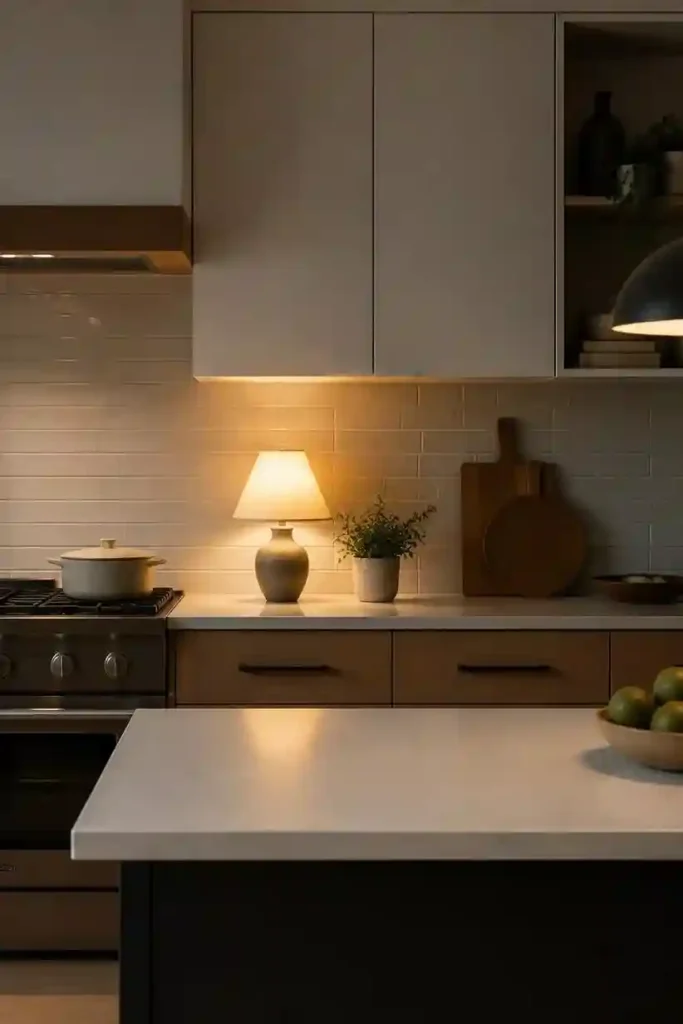
Keep lamps away from water and active prep areas, and use a stable base that will not be knocked easily. Plug-in lighting should not create a trailing cord across a work surface. If outlets are limited, under-cabinet lighting may be a better practical choice for counters that still need task light.
9. Bring in Textiles Without Making the Room Fussy
Kitchen Styling Ideas do not have to rely on hard accessories. A washable runner, simple cafe curtain, seat cushion or well-made dish towel can add softness and pattern to a room dominated by cabinetry, stone, metal and tile.
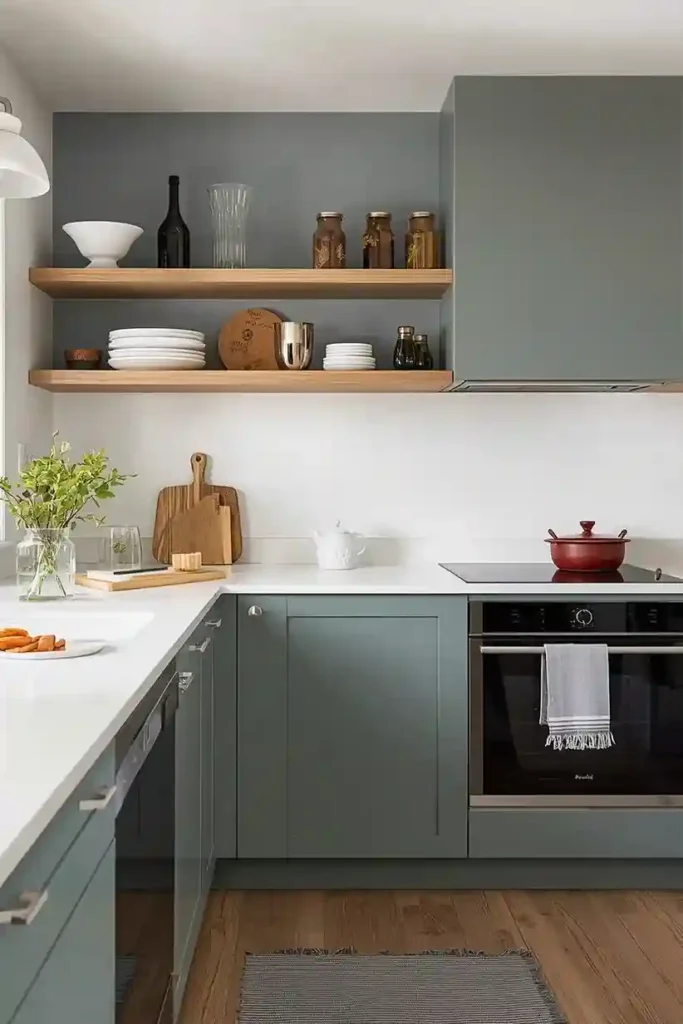
Choose textiles for the way the kitchen is used. Flat-weave runners are easier to manage in busy routes than thick piles, and window fabric near a sink should be easy to wash. If the room already has patterned tile or strong stone, use quieter textiles so several surfaces are not competing at once.
10. Keep Cookbooks in a Small, Useful Group
A few cookbooks can add color and height while keeping recipes close to where they are used. Stand a short row at the end of a counter, place two or three books beneath a small object, or keep them on an open shelf near the dining side of the kitchen.
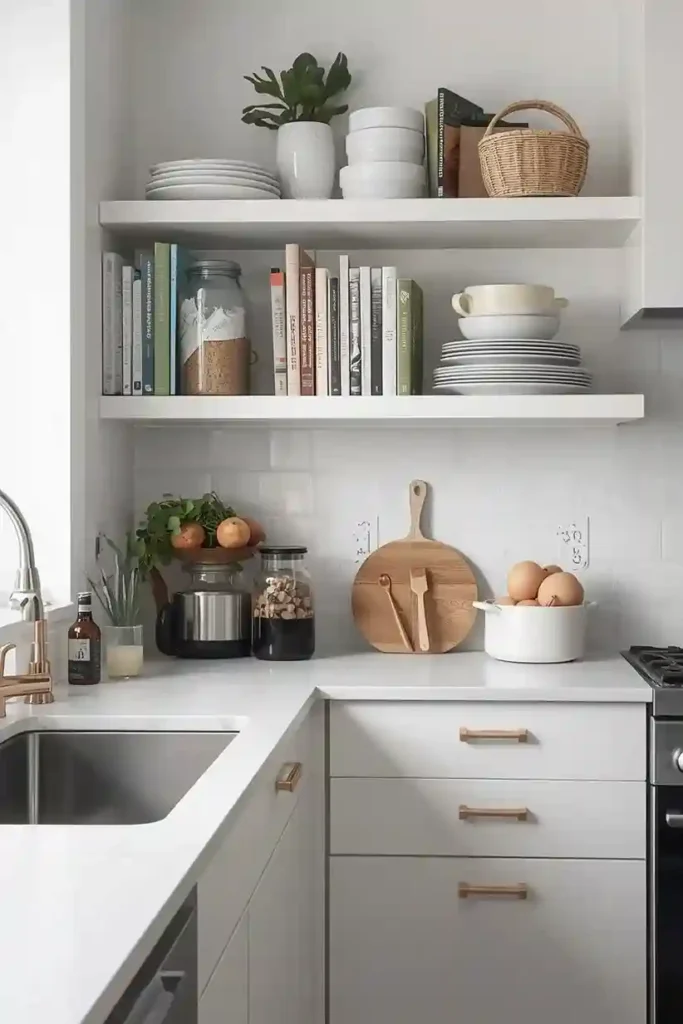
Do not place books where splashes, steam or grease are likely to reach them. Rotate the group if your collection is large rather than displaying everything at once. Covers do not need to match, but a limited stack usually looks more deliberate than a crowded shelf.
11. Let Everyday Ceramics Do Some of the Decorating
Mugs, bowls, pitchers and serving pieces can provide shape and color without introducing separate decor. Displaying a small group of ceramics works particularly well in glass-front cabinets, on open shelving or on a hutch where useful pieces can be reached easily.
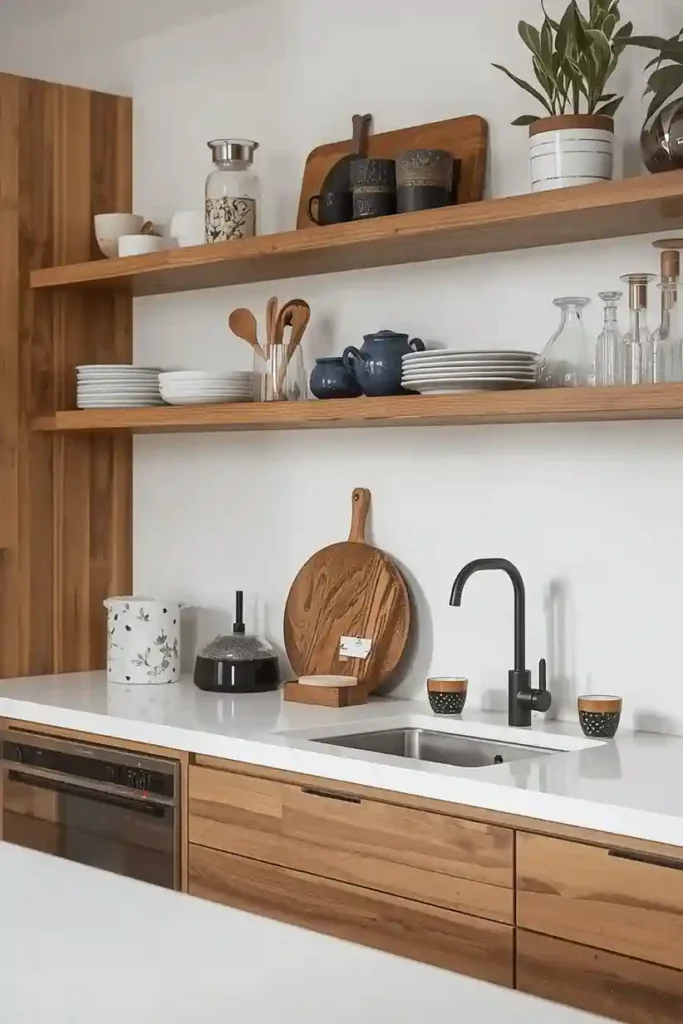
Group items by a loose connection such as material, color family or shape. The aim is not to make every piece identical. A few differences keep the display natural, while one repeated tone can stop it from looking random. Keep fragile items away from busy counter edges.
12. Add Herbs or Greenery Where the Conditions Suit Them
Fresh herbs can bring life to a kitchen while supporting cooking. Basil, mint or parsley may work near a bright window if the light and temperature suit the plant, while a simple branch or hardy houseplant can add green where food herbs are not practical.
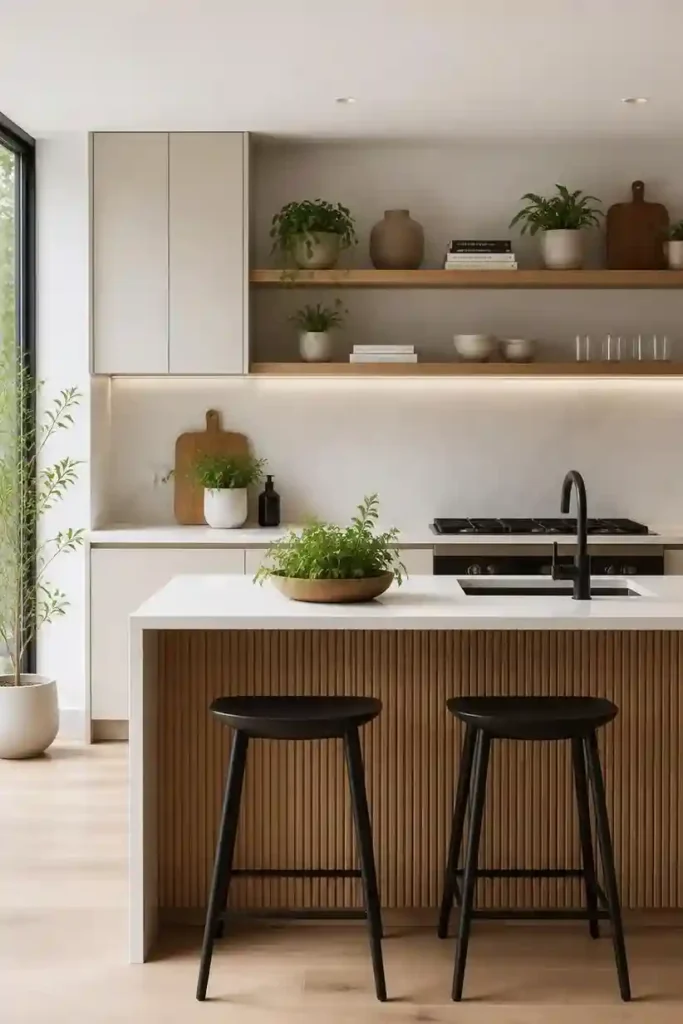
Use a pot with drainage protection so water does not damage a sill or counter. If natural light is weak, choose a plant that suits lower light rather than forcing a sun-loving herb into the space. For more low-cost small-space accessorizing, cute dorm decorations can provide useful ideas for keeping plant and decor groups compact.
13. Treat Glass-Front Cabinets as Display Space
Glass-front cabinets can make a run of storage feel lighter, but they work best when the contents are edited. Use them for tableware, glassware or serving pieces that look good together and are used often enough to stay clean.
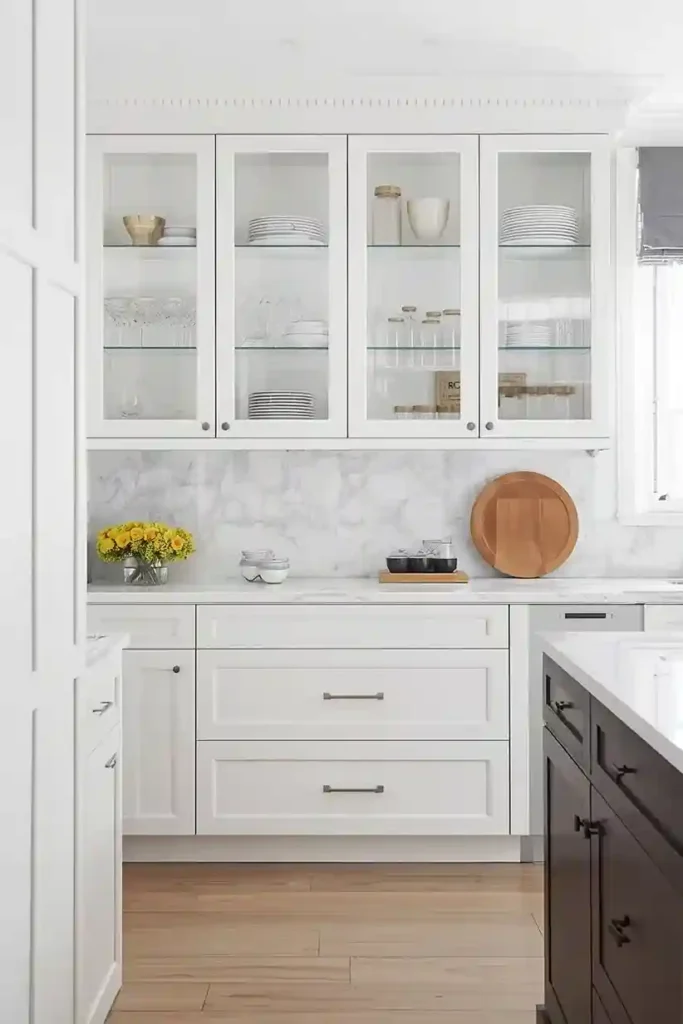
Keep the background simple and avoid packing every shelf to the door. A mix of stacked and upright pieces creates rhythm without needing extra ornaments. If the cabinet is brightly lit, remember that every object will become more visible, so a smaller selection is usually easier to maintain.
14. Repeat Materials in Small Doses
Strong Kitchen Styling Ideas often rely on repetition rather than matching sets. If the room already contains oak, brushed metal and cream stone, small touches in those same families can make new accessories feel connected to the kitchen instead of added at random.
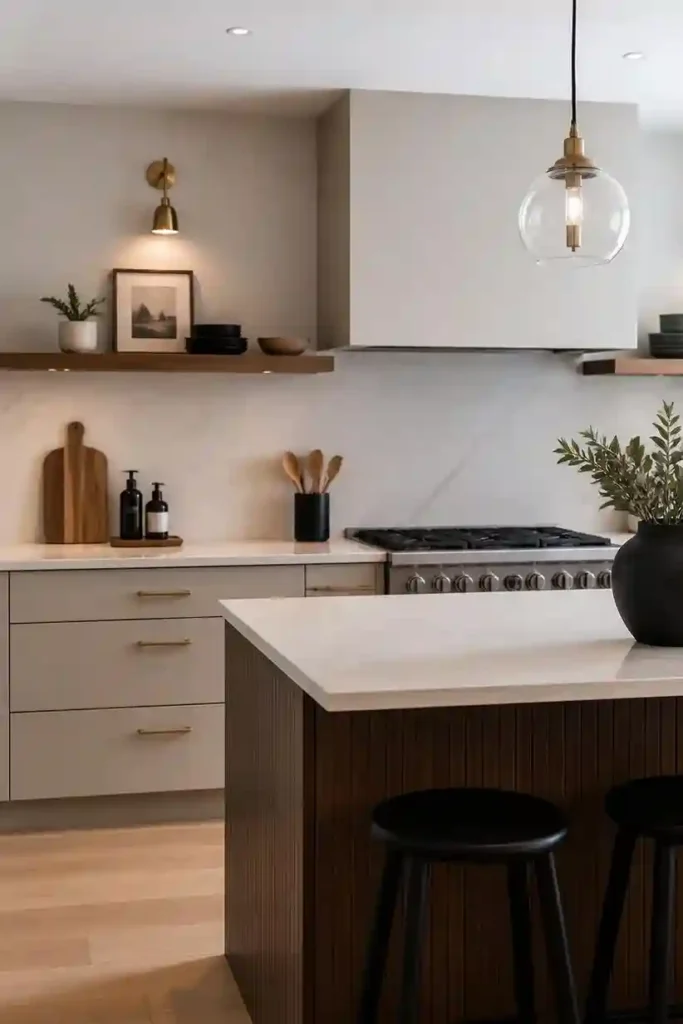
Repeat a material two or three times across different zones. A wood board can relate to stools, a brass frame can echo cabinet hardware, and a ceramic bowl can repeat the backsplash tone. Keep the repetitions loose so the room feels coordinated rather than staged.
15. Make the Sink Zone Look Cleaner With Fewer Pieces
The sink is one of the hardest areas to style because everything there has a job. A narrow tray or caddy can keep soap, a brush and a cloth together while leaving enough open counter for water to be wiped away quickly.
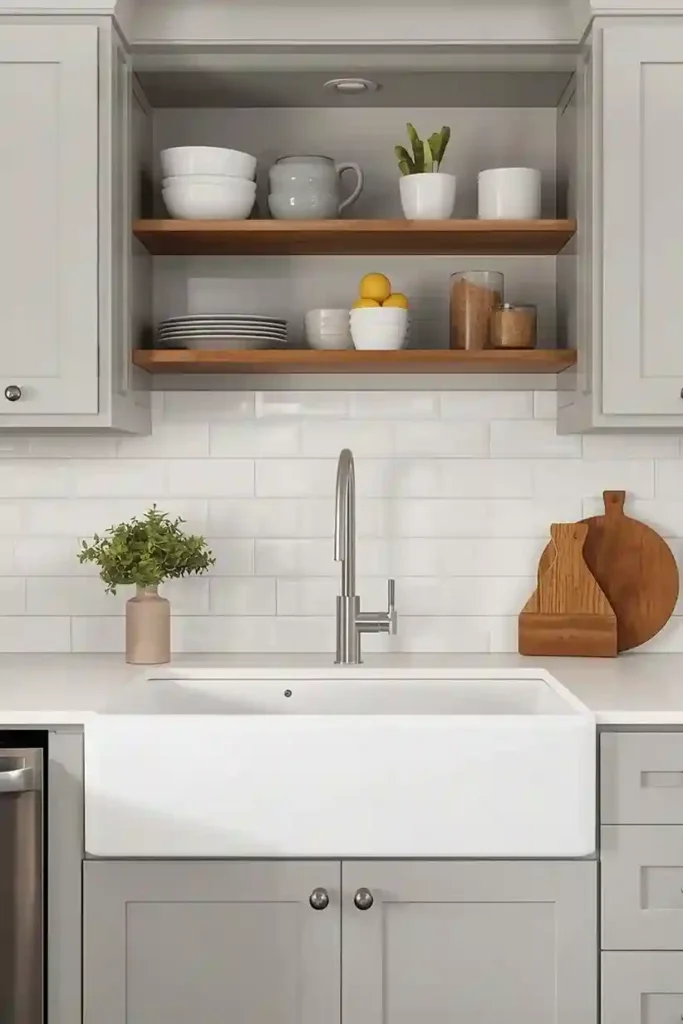
Decanting is optional. If original bottles are easier to identify and refill, keep them. The bigger improvement comes from reducing duplicates and choosing a holder that can be washed easily. Store spare sponges, dishwasher tablets and cleaning products in a suitable cabinet rather than lining them around the sink.
16. Use Hardware as a Small Styling Detail
Cabinet handles and knobs sit across a large part of the room, so even a modest change can alter the overall impression. Simple brass, bronze, black, nickel, wood or ceramic hardware can support the kitchen’s existing character without adding objects to the counters.
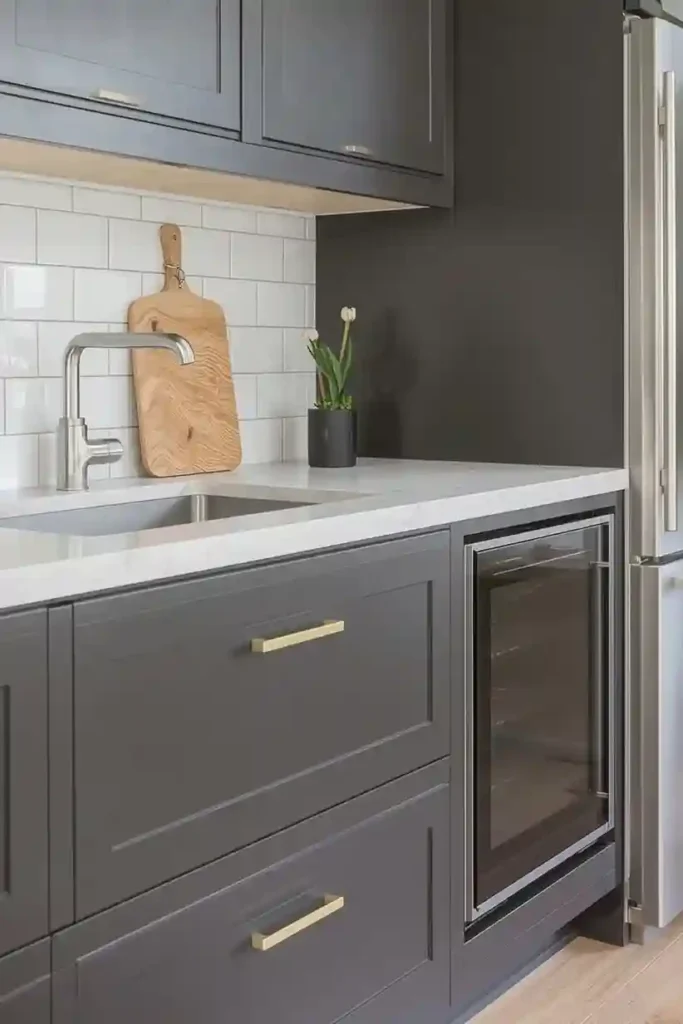
Before replacing hardware, measure the current hole spacing and test one sample against the cabinet finish. A new pull that needs fresh drilling is a larger commitment than a same-size replacement. For broader material and fixture directions, Kitchen Trend Ideas can help you decide which changes deserve a more permanent investment.
17. Keep the Window Area Light and Useful
A kitchen window often needs less styling than people expect. A small herb pot, a simple blind or cafe curtain, and a clear sill may be enough. Natural light is already a strong visual feature, so crowding the glass can make the room feel smaller.
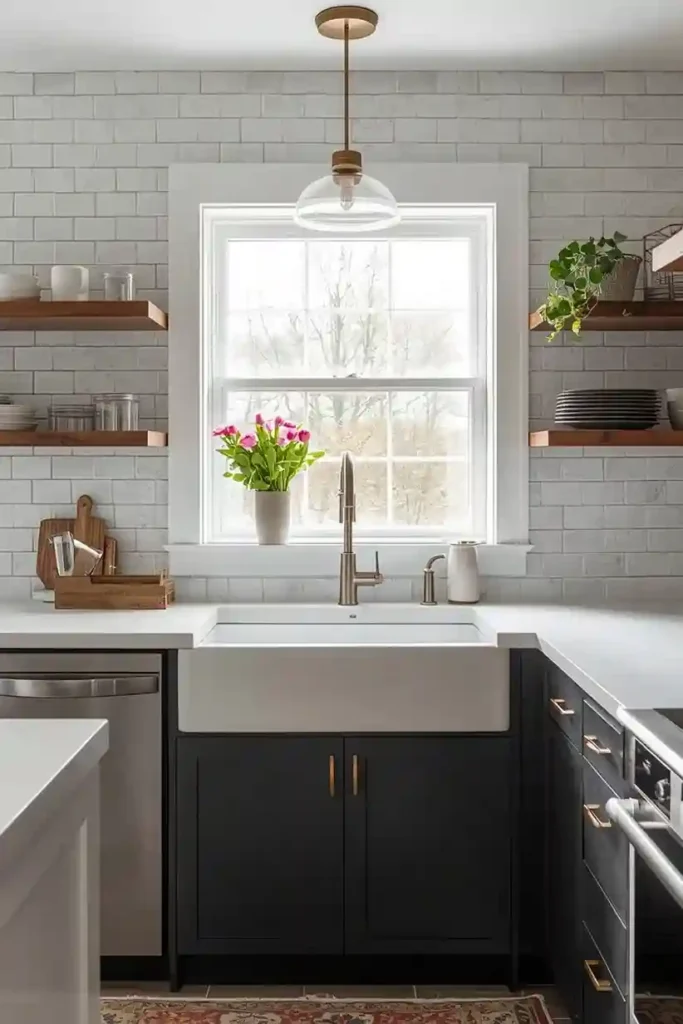
Keep tall objects away from the main view and make sure fabric does not interfere with a tap, handle or opening window. In a narrow kitchen, leaving the sill mostly clear can make the counter and surrounding walls feel less compressed.
18. Use Empty Space as Part of the Arrangement
One of the easiest Kitchen Styling Ideas to overlook is negative space. A clear patch of counter, an open section of shelf or a blank wall beside a strong feature gives the eye somewhere to rest and makes the chosen objects look more deliberate.
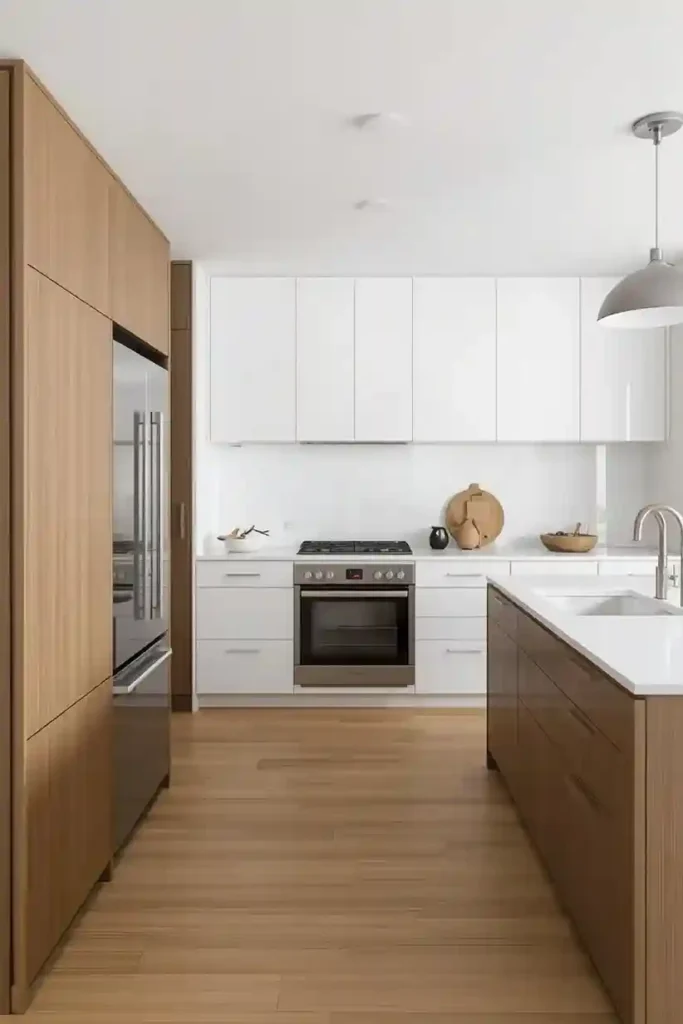
After styling a zone, remove one item and look again. If nothing feels missing, the simpler version is probably stronger. This is especially helpful in small kitchens, where a few inches of visible surface can make the room feel easier to use and less crowded.
19. Finish With One Personal or Vintage Piece
A kitchen feels more lived in when at least one object has personal meaning or a little age. A family bowl, vintage stool, old framed recipe, handmade jug or small flea-market find can break up the uniform finish of newer cabinets and appliances.
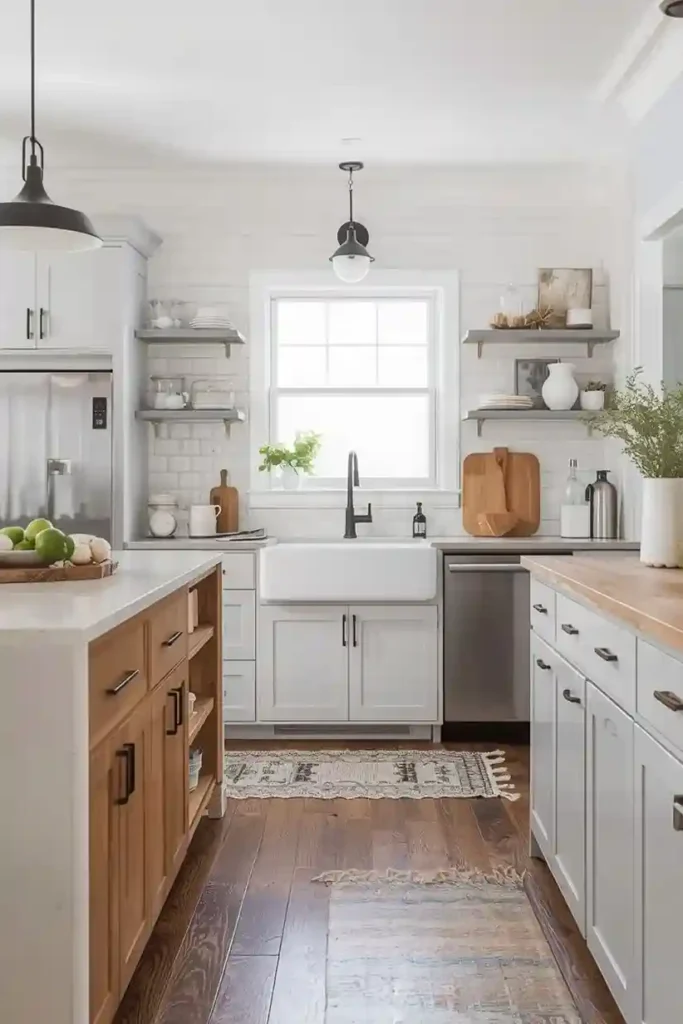
Choose one or two pieces that suit the room and can live safely in a working kitchen. Do not place delicate items where water, heat or grease will damage them. If you are deciding between decorative updates and larger changes, review Kitchen Trend Ideas first so permanent choices and styling details support the same overall direction.
How to Keep a Styled Kitchen Practical
Good Kitchen Styling Ideas should make the room easier to live with, not harder to clean. Protect the main prep zone, keep frequently used items near the tasks they support, and place decoration in quieter areas such as end walls, shelves, dining corners and side counters. If an arrangement needs to be moved every time you cook, it is probably in the wrong place.
Use a simple edit before buying anything new. Remove one group, clean the surface and return only the pieces that are useful or genuinely add character. This approach also makes it easier to see whether the room needs styling at all, or whether the real problem is storage, lighting or layout.
Conclusion
The best Kitchen Styling Ideas create order, warmth and personality without covering every surface. Start with the routines that already happen in the room, keep the working areas clear, then add useful objects, soft texture, art and personal pieces in measured amounts. A kitchen looks finished when the styling supports daily life rather than competing with it.
FAQs
What is the easiest way to style a kitchen without remodeling?
Start by clearing the counters, grouping daily essentials on one tray, adding one piece of art or a small lamp, and editing open shelves. These changes can shift the look of the room without altering cabinets or layout.
How much decor should I put on kitchen counters?
Keep most of the main prep surface open. Use decor in smaller edge zones and favor pieces that are useful as well as attractive, such as a fruit bowl, cutting boards, a utensil crock or a coffee tray.
How do I style a small kitchen without making it look cluttered?
Use fewer, larger groups rather than many small objects. Keep shelves partly empty, use vertical space carefully, repeat a limited palette and protect a clear stretch of counter for food preparation.
What can I put on top of kitchen cabinets?
If there is a large gap above the cabinets, one or two substantial pieces can work better than a row of small objects. Avoid adding items that collect heavy grease or dust, and leave the space empty if the room already feels visually busy.
How can I make a kitchen feel warmer?
Wood, ceramics, textiles, warmer lamp light, natural color and personal objects can soften hard finishes. Add them in small amounts and check how they look beside the existing cabinets, counters and flooring.