
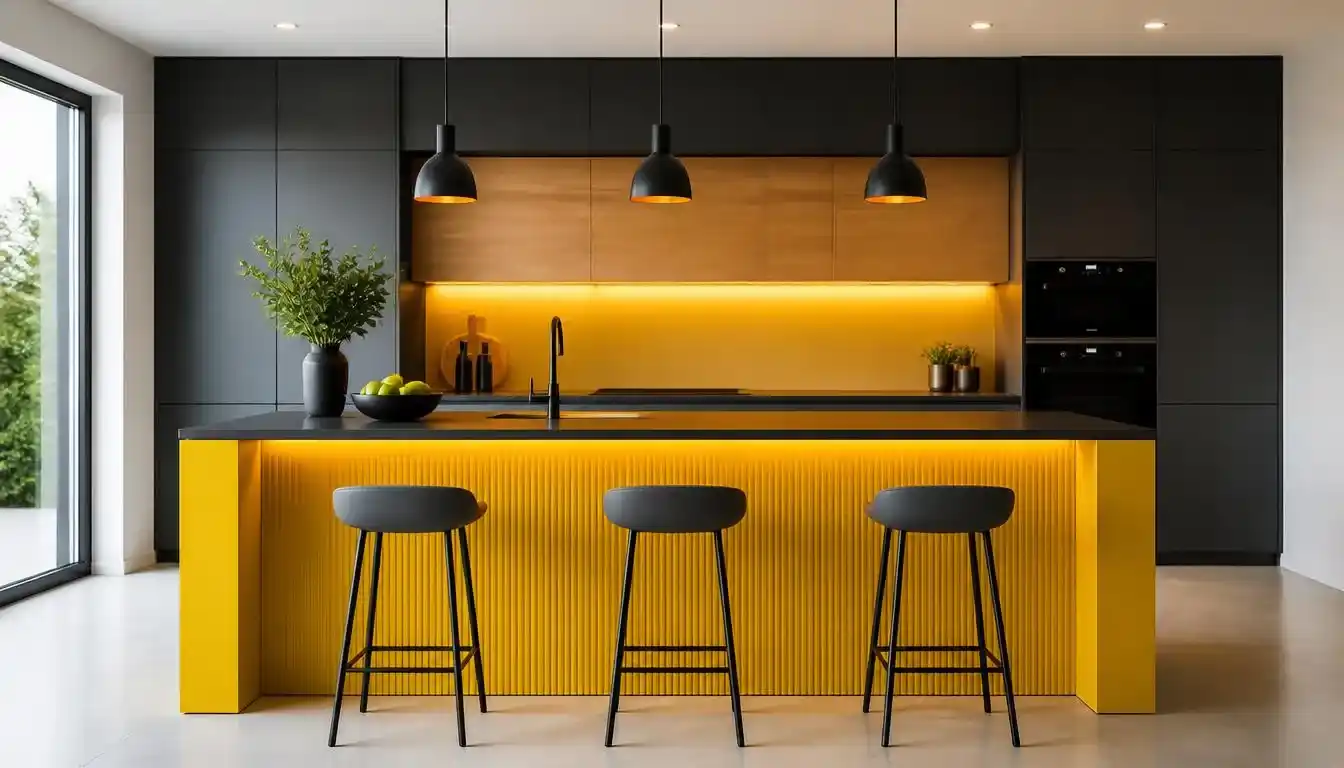
18 Kitchen Island Ideas for Better Storage, Seating and Style
A kitchen island can solve several problems at once, but only when its size and purpose fit the room. An island that blocks cabinet doors, narrows a busy walkway or collects clutter quickly becomes more obstacle than asset.
These Kitchen Island Ideas focus on useful choices first, then shape, material and character. If you have already worked through our kitchen styling ideas, think of the island as the largest styling decision in the room. It needs to support cooking, storage, seating and movement before decorative details are added.
18 Practical Kitchen Island Ideas for Real Homes
The strongest Kitchen Island Ideas begin with the floor plan. Check where people walk, how appliance and cabinet doors open, which tasks need extra surface area and whether seating is genuinely useful. Once those basics are clear, the island can become a natural part of the kitchen rather than a block placed in the middle.
1. Size the Island Around Movement, Not Empty Floor
A large open area does not automatically need the largest island that will fit. The better starting point is circulation. People should be able to pass one another, open drawers and use major appliances without the island becoming a bottleneck. The National Kitchen & Bath Association’s planning guidelines recommend a work aisle of at least 42 inches (107 cm) for one cook and 48 inches (122 cm) for two or more.

Mark the proposed footprint on the floor with painter’s tape before ordering cabinetry. Open nearby doors and stand where stools would sit. If the room feels tight during this simple test, reduce the island depth or length, or consider a narrower worktable instead.
2. Give the Island One Primary Job
Among practical Kitchen Island Ideas, the clearest designs usually have one main purpose. An island may be a prep station, a storage hub, a family eating spot or a serving surface. It can support several tasks, but one should lead the plan.
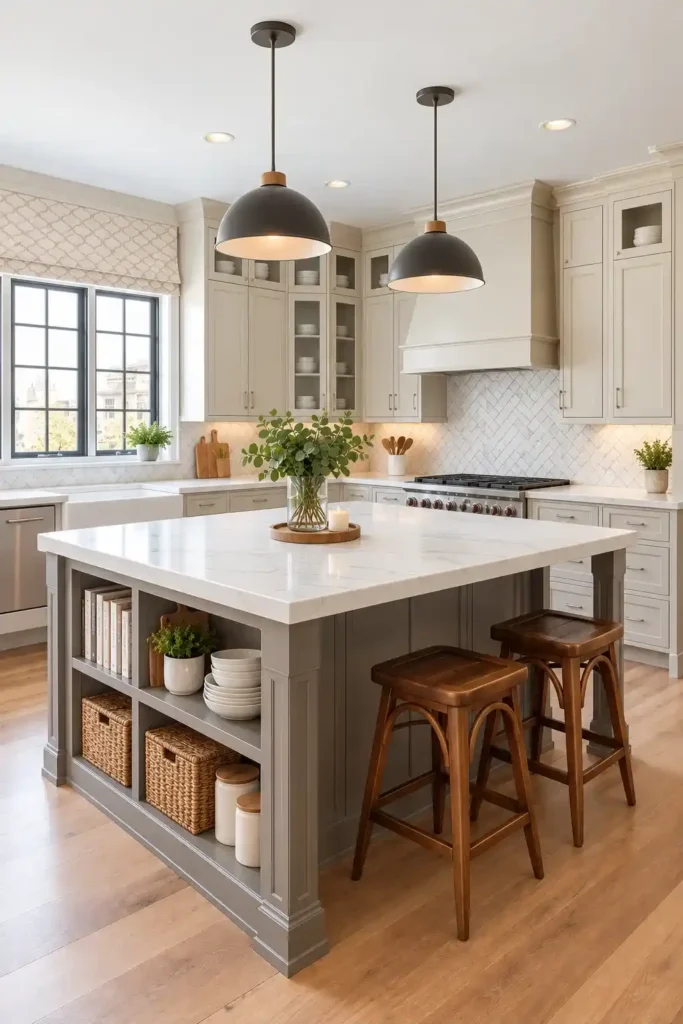
If food preparation is the priority, protect a generous clear work surface and keep knives, bowls and waste storage nearby. If casual meals matter more, plan comfortable seating and avoid placing the busiest cooking zone directly in front of seated guests.
3. Use Deep Drawers for Everyday Cookware
Deep drawers make good use of the island base because pans, mixing bowls, plates and food containers can be viewed from above. They also reduce the need to reach into the back of a deep cabinet for heavy everyday pieces.
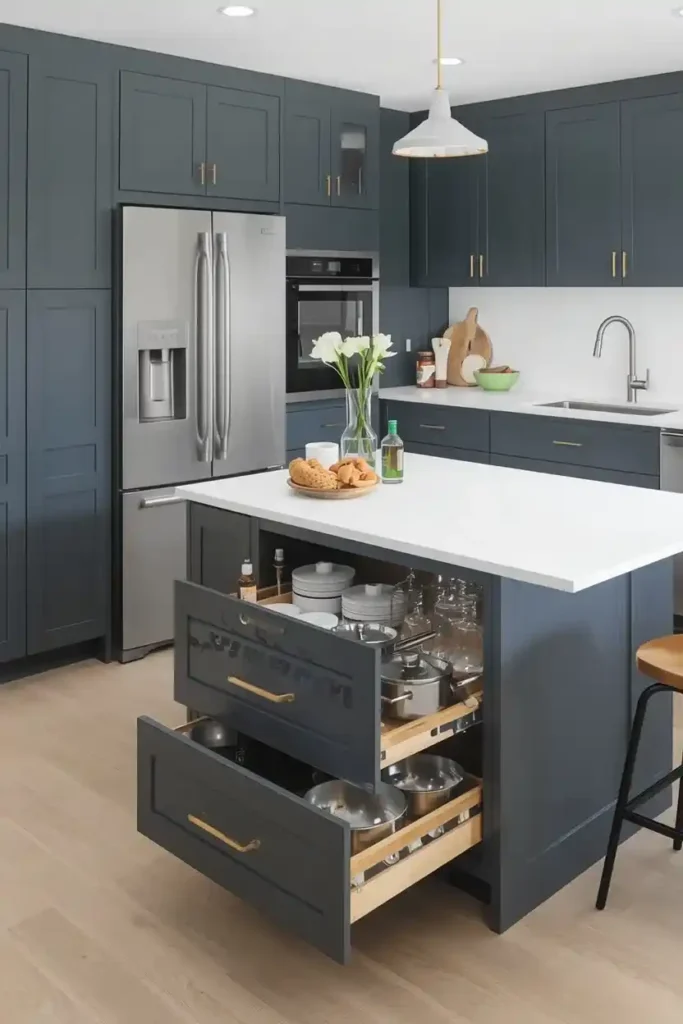
Group drawers by the work happening above them. Store prep tools near the main chopping area and dishes closer to the dining side if the island is used for serving. Internal dividers help only when they match the items you actually own, so plan around real storage needs.
4. Add Seating Only Where It Fits Comfortably
Island seating can make the kitchen more social, but stools need room for knees, feet and people passing behind them. A row of seats squeezed into a narrow aisle can make the whole room harder to use even if it looks efficient on a plan.
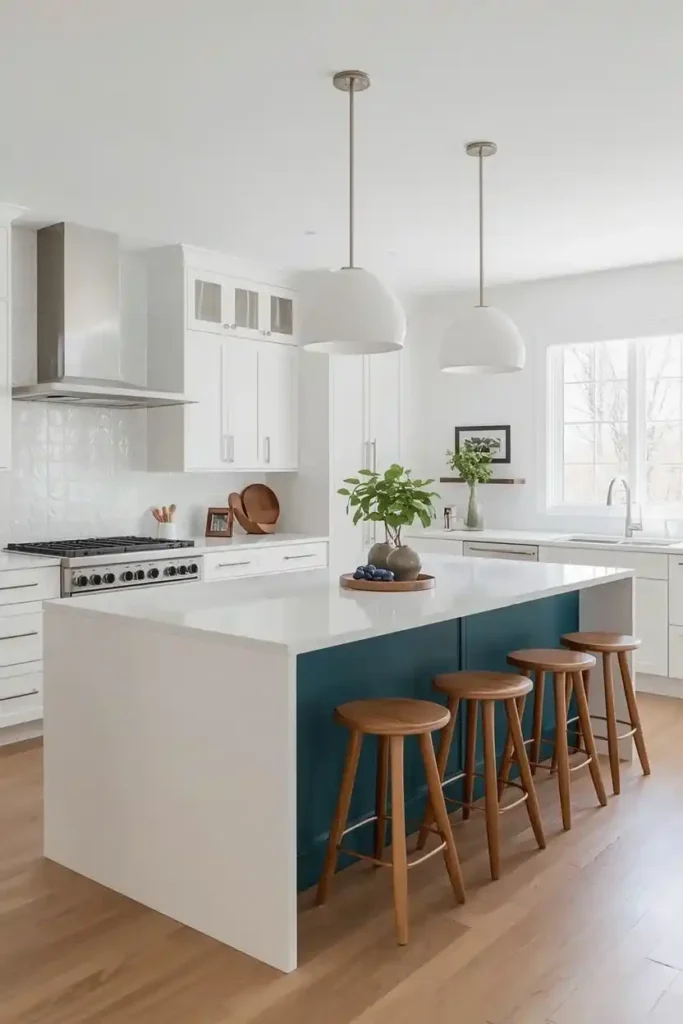
Choose the number of seats after checking the available width and the route behind them. In a compact kitchen, two well-spaced stools may work better than four crowded ones. Backless stools that tuck fully under the counter can also keep a busy walkway clearer when the seats are not in use. If everyday meals need more seats than the island can give, our modern dining room ideas cover table sizes and the space each chair needs.
5. Try a Furniture-Style Island for a Softer Look
A furniture-style island can feel lighter than a full block of cabinetry. Visible legs, framed end panels, open lower shelves or a slightly raised base give the center of the kitchen more of a worktable character.

This direction works especially well in traditional, cottage and mixed-style kitchens, but it can also soften a modern room. Recent kitchen trend ideas have moved toward islands that feel less built-in, so a simple table-like base can add character without making the design feel temporary.
6. Mix Closed Storage With One Open Section
Closed cabinets keep appliances and supplies out of sight, while one open shelf or end niche can break up a large island visually. This balance is useful when a solid run of doors would feel heavy in an open kitchen.
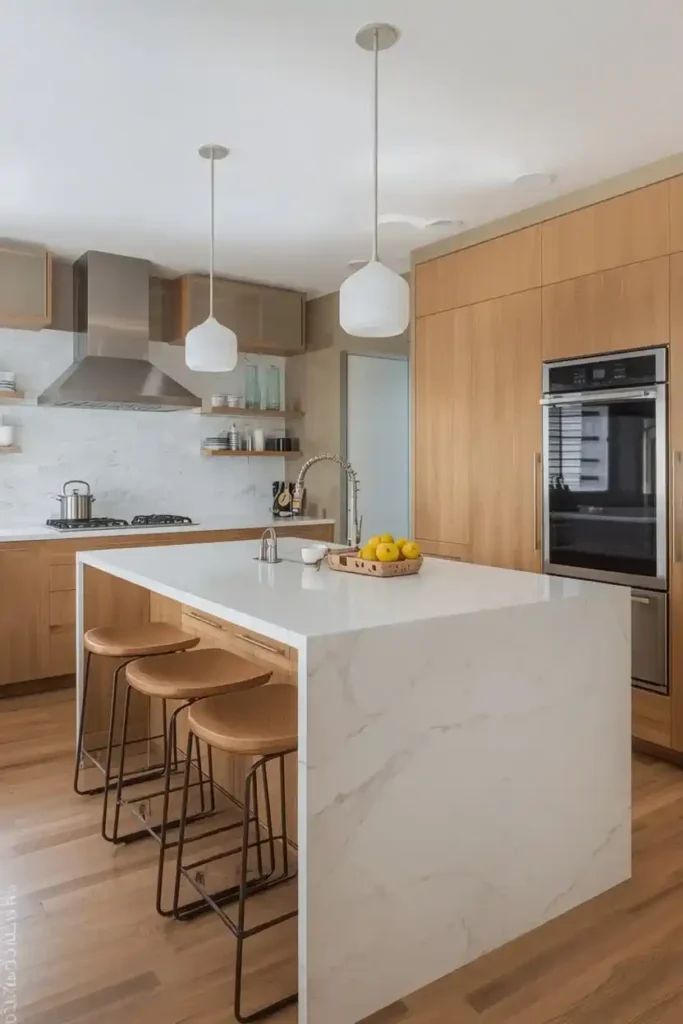
Use the open section for things that are easy to keep tidy, such as cookbooks, serving bowls or a small basket. Keep the busier storage behind doors. A shallow niche on the dining end can add interest without taking space away from the main working side.
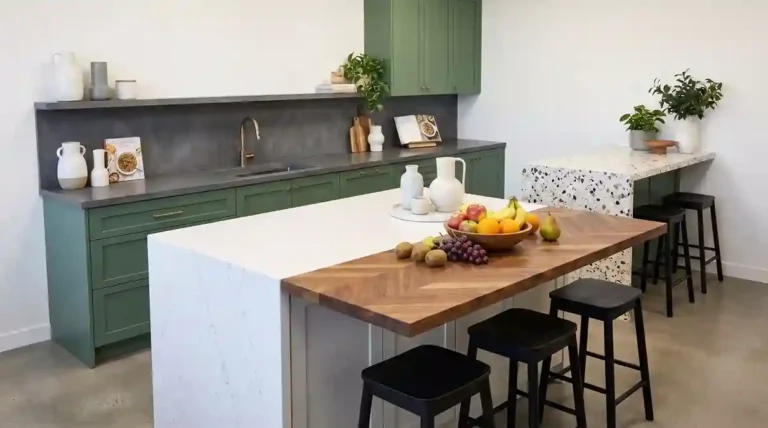
7. Use a Contrasting Wood Finish
Wood can give an island a warmer presence without requiring the entire kitchen to match. Oak, walnut or another visible-grain finish can sit comfortably beside painted perimeter cabinets and help the island read as a separate piece of furniture.
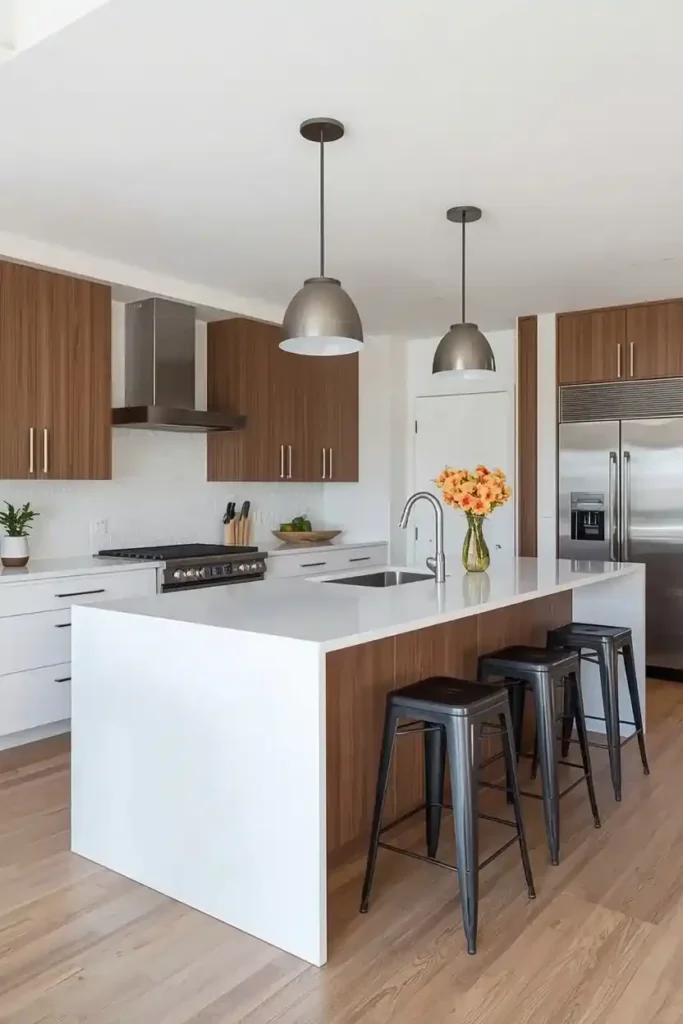
Compare samples beside the floor, countertop and cabinet color in the actual room. Darker woods can feel heavier in limited daylight, while very pale woods can disappear against similar flooring. The goal is a clear relationship between finishes, not a perfect match.
8. Round the Ends Where Traffic Passes Close By
Rounded corners or a softly curved end can reduce the hard visual effect of a rectangular island and may feel easier to move around in an open plan. The shape is most useful where people naturally pass close to one end of the island.

A full curved cabinet is not the only option. A rounded countertop corner, curved breakfast end or oval worktable can bring the same softer line with less custom construction. Keep the curve tied to circulation instead of adding it only as decoration.
9. Make the Countertop the Main Feature
Some Kitchen Island Ideas work best when the countertop carries most of the visual weight. A stone with clear veining, a thick timber top or a simple waterfall edge can give the island presence while the surrounding cabinetry stays quiet.
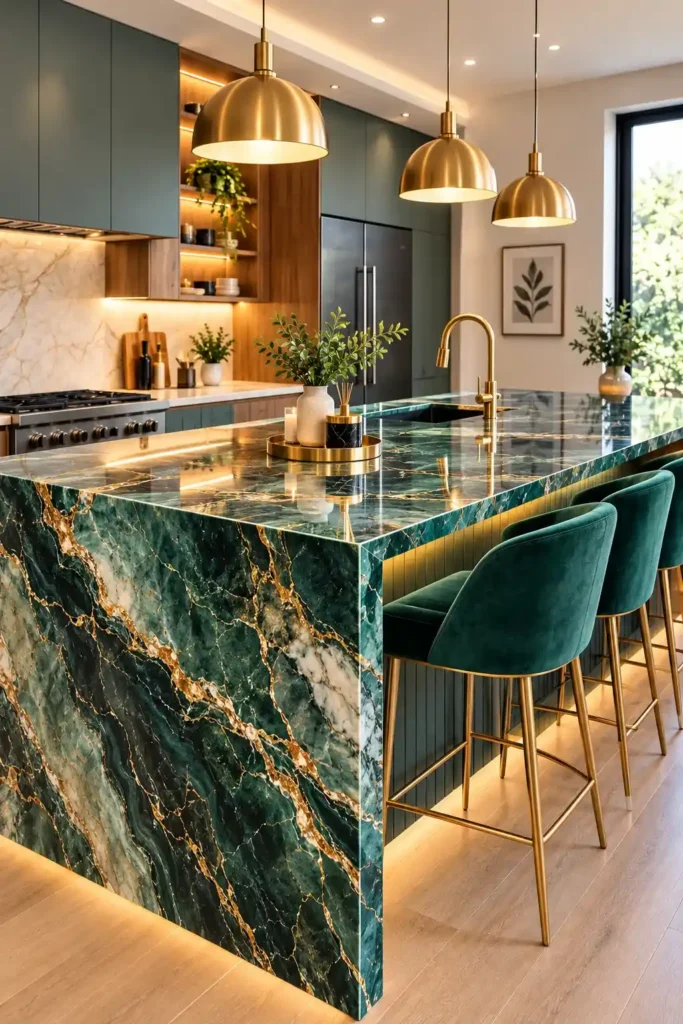
Choose the surface for maintenance as well as appearance. Natural stone, engineered surfaces, wood and stainless steel behave differently around stains, scratches, heat and moisture. Ask the fabricator or supplier about care before committing to a material used on the busiest surface in the room.
10. Add a Prep Sink Only if It Improves the Workflow
A second sink can be useful in a large kitchen where several people cook or where the main sink is far from the primary prep area. It can also keep vegetable washing and food preparation separate from cleanup.
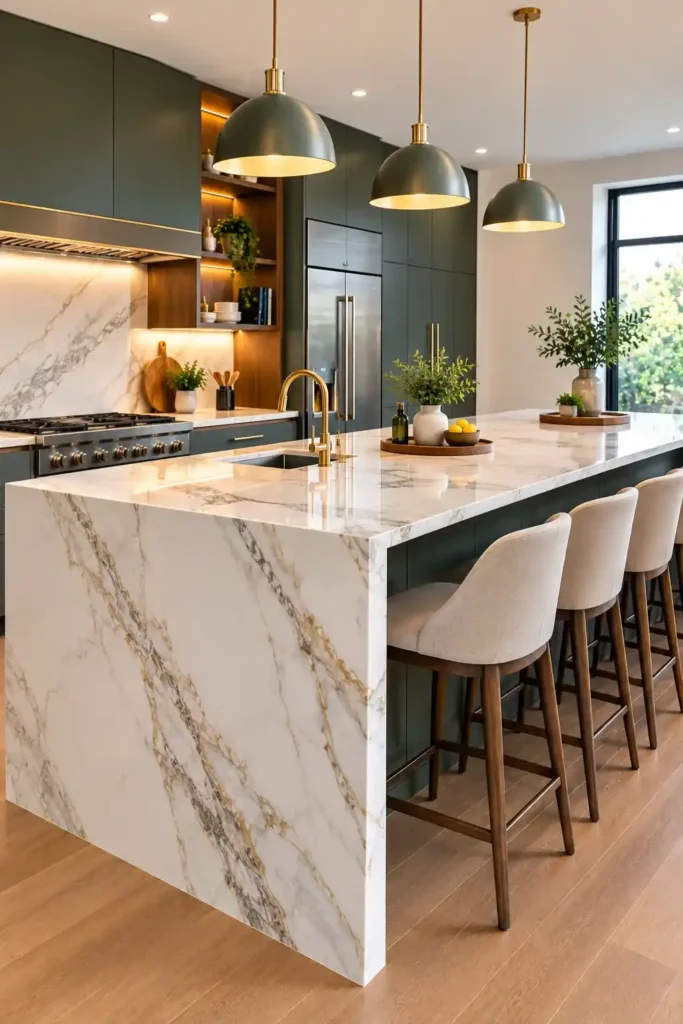
Do not add plumbing simply because the island is large enough to hold it. A sink reduces uninterrupted counter space and adds cost below the surface. Check how often a second water point would genuinely be used and have plumbing planned by qualified professionals.
11. Keep a Clear Landing Zone Beside Appliances
If the island sits opposite an oven, refrigerator or dishwasher, an open section of counter can provide a useful place to set down hot dishes, groceries or clean tableware. This small planning detail can make the room feel easier during busy routines.
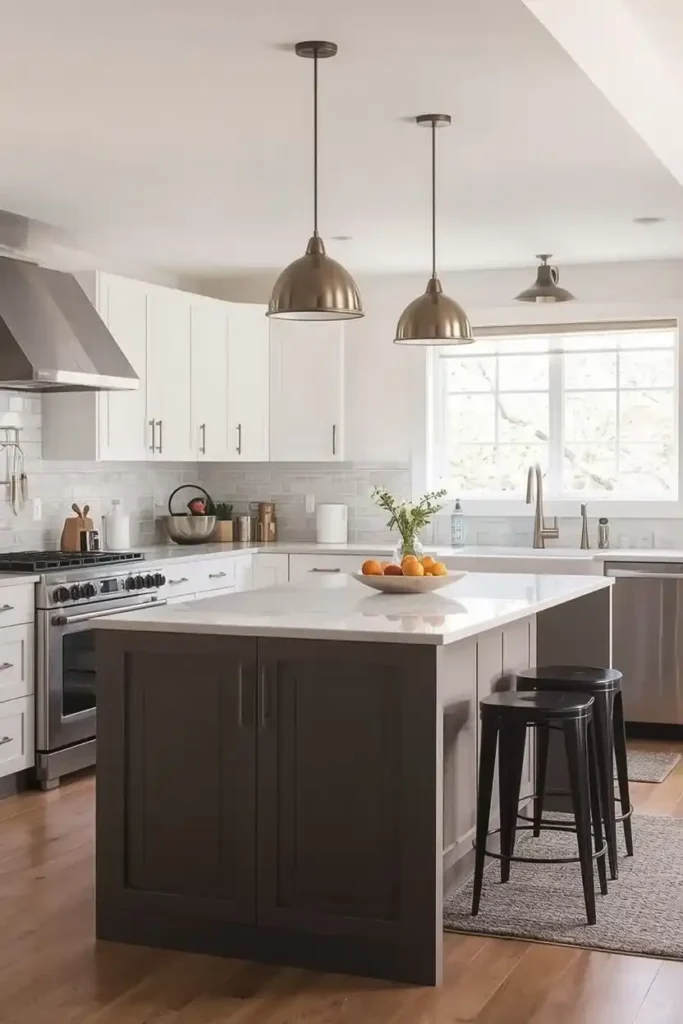
Avoid filling every inch of the island with a sink, cooktop, appliance or decorative object. A plain stretch of countertop often does more useful work than another feature. Protect that space if the kitchen handles frequent cooking or family meals.
12. Build in Power Without Making Cords a Hazard
Kitchen Island Ideas often include charging, small appliances or a lamp because the island sits away from wall outlets. Power can be useful, but it should be planned as part of the electrical design rather than added later with loose extension cords.
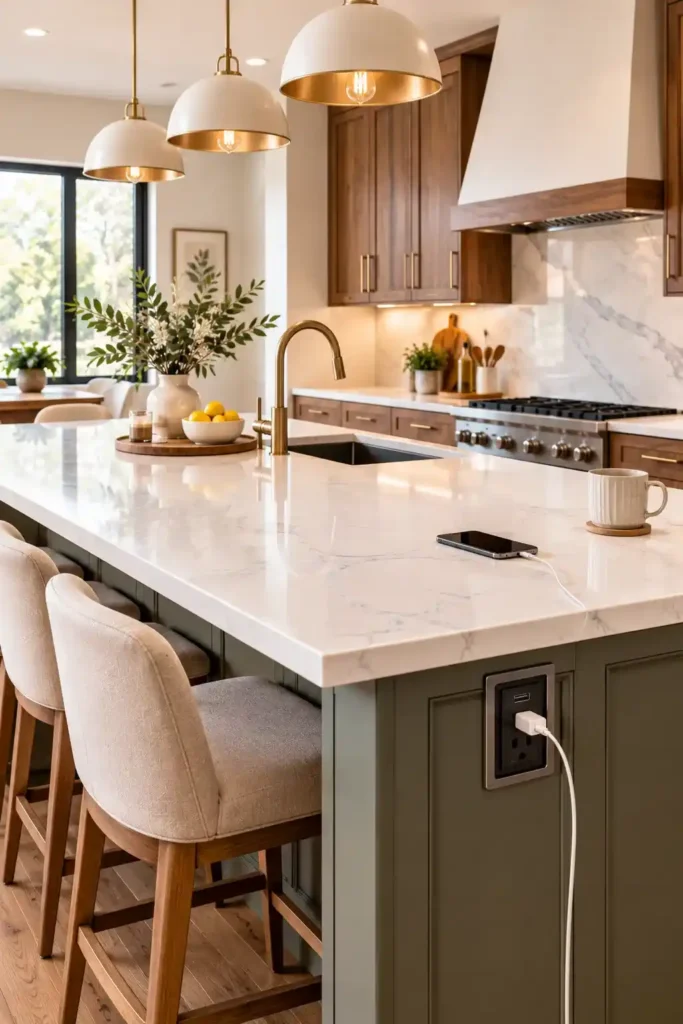
Outlet position and requirements vary by location and installation, so use a qualified electrician and follow local rules. Place power where it supports real tasks without leaving cords across walkways, seating positions or wet work areas.
13. Use a Table-Height End for Longer Meals
Bar stools are useful for quick breakfasts, but a table-height section can be more comfortable for longer meals, homework or conversation. It can also help the island feel connected to the dining area rather than acting only as a kitchen work block.
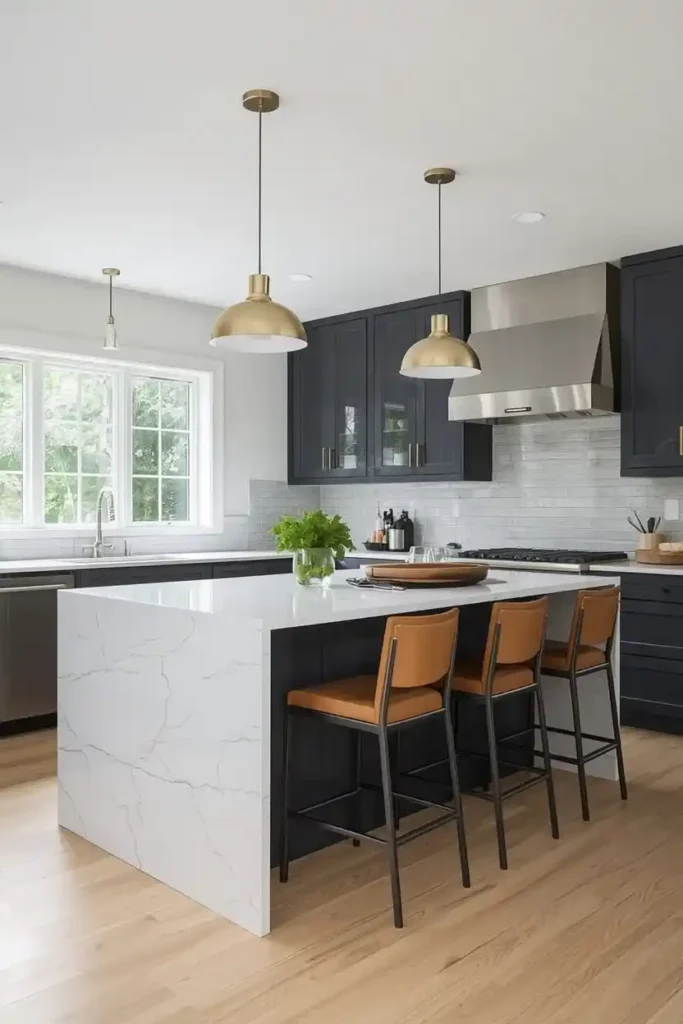
The table section may extend from one end, turn at a right angle or sit alongside the main island. Keep enough separation between seated people and active cooking tasks. If the room already has a dining table nearby, decide whether another eating zone adds real value before using floor space for it.
14. Choose a Mobile Island for a Small Kitchen
A freestanding cart or movable worktable can add prep space without the commitment of a fixed island. It is especially useful in rentals or kitchens where the center floor needs to stay flexible for different tasks.
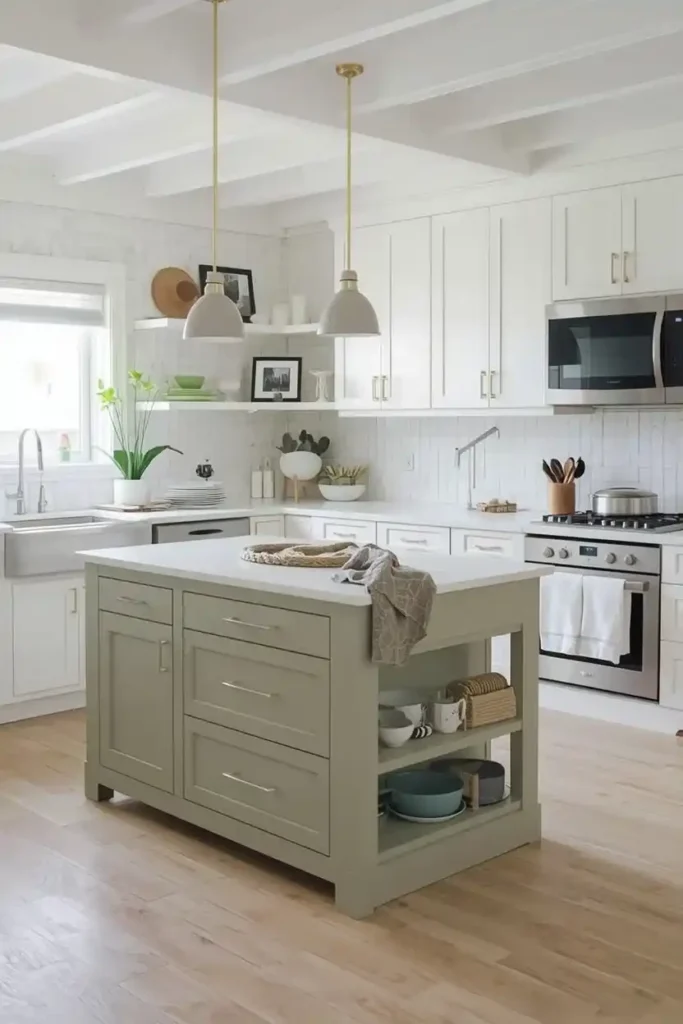
Look for a stable frame, a durable work surface and wheels that lock securely if mobility is important. Keep the piece narrow enough to move without hitting cabinets. In very compact rooms, a small table may be more useful than trying to imitate a full-size built-in island.
15. Use Color on the Island Instead of Every Cabinet
A contrasting island can introduce color without making the whole kitchen depend on one strong shade. This is one of the easier Kitchen Island Ideas to adapt because the center unit can carry a stronger color while perimeter cabinets remain quieter.
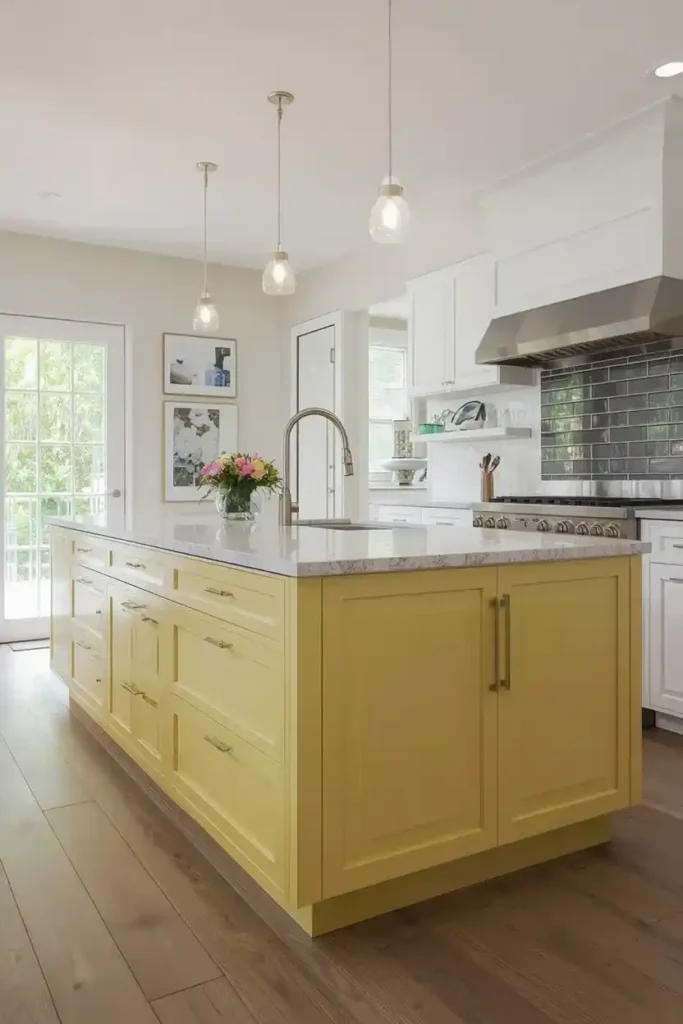
Test the color next to the countertop, flooring and nearby cabinets throughout the day. Light can change how saturated a paint looks. If the room already has expressive stone or patterned tile, a restrained island color may create better balance than adding another strong element.
16. Add Texture With Fluting or Framed Panels
Vertical fluting, beadboard, reeded timber or framed end panels can make a plain island base feel more considered. Texture is most effective on the outer or seating side, where it can be seen without interfering with drawers and working storage.
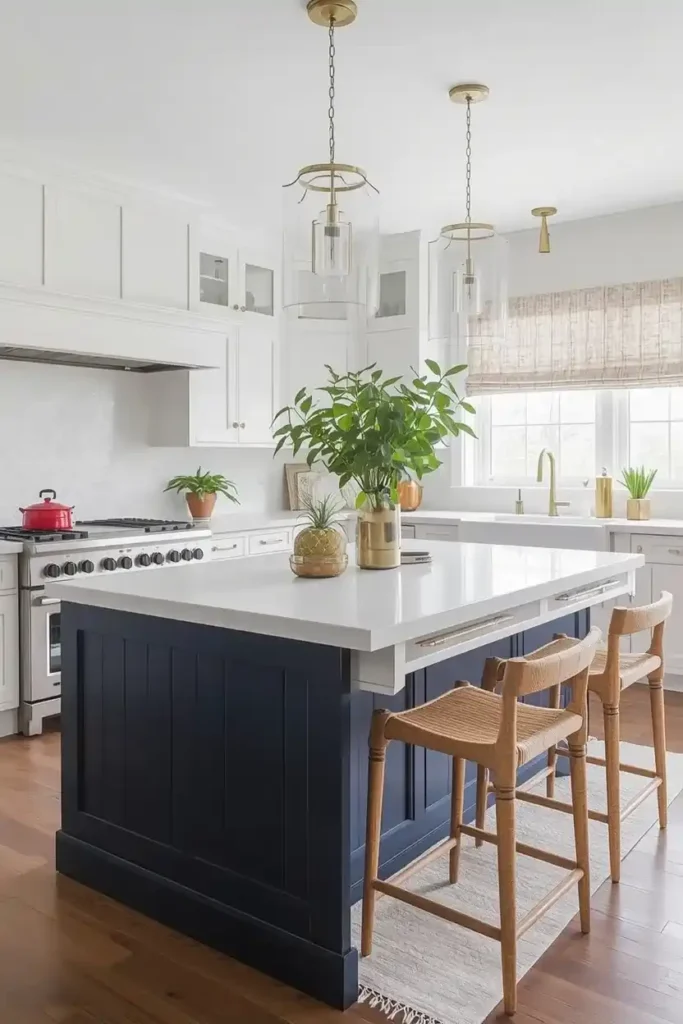
Keep cleaning in mind. Deep grooves close to the cooking zone may collect more dust and splashes than a flat panel. A simpler texture on one side can give the island character without turning every face into a detailed surface.
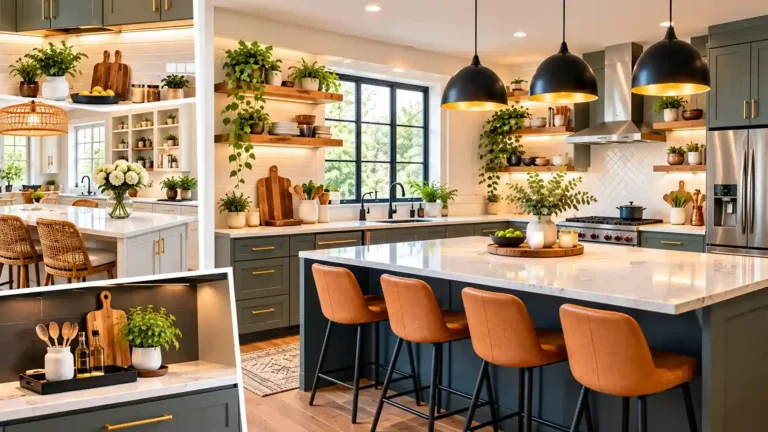
17. Use Lighting to Define the Island Zone
Pendants can help mark the island as a distinct work and gathering area, especially in an open-plan kitchen. The fixtures should provide useful light without blocking sightlines or competing with cabinet doors and taller family members.

Choose the size and number of fittings after the island dimensions are final. One larger pendant can suit a compact island, while a longer surface may need several smaller fixtures. Layer decorative lighting with good general and task light rather than expecting pendants to do every job.
18. Let the Island Carry Some Personality
The island is a good place for a detail that might feel too strong across the whole kitchen. A vintage stool, unusual pendant, painted base, open cookbook shelf or distinctive stone can give the room character while the main cabinetry stays calmer. Thoughtful Kitchen Island Ideas use personality in one or two places rather than covering every surface with competing details.
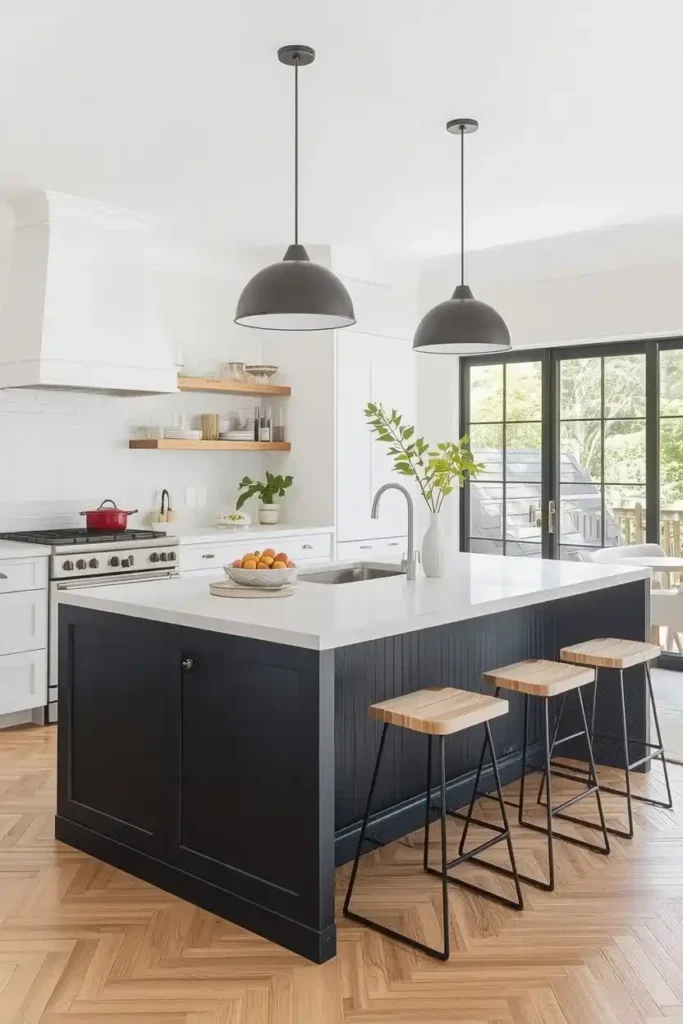
Keep the choice connected to the rest of the room. The island should still feel right when one popular finish or shape is no longer everywhere, so choose details that suit the home instead of copying a complete showroom look.
How to Choose the Right Island for Your Kitchen
Before choosing materials or stools, decide whether the room truly benefits from an island. Useful Kitchen Island Ideas protect circulation, improve storage or work surface, and support routines that already happen in the kitchen. If a fixed island creates awkward routes, a peninsula, worktable or movable cart may solve the same problem with less pressure on the floor plan.
Keep the permanent choices simple enough to live with for years, then use lighting, stools and accessories for easier changes. This is where styling can help with the finishing layer, while trend ideas can help you compare current materials and forms without rebuilding the room around a short-lived look.
Conclusion
The best Kitchen Island Ideas are not simply the biggest or most decorative options. A good island fits the room, protects movement, provides the storage or seating you actually need and uses materials that suit everyday wear. Plan the practical work first, then add color, texture and personality where they make the center of the kitchen feel connected to the rest of the home.
FAQs
How do I know if my kitchen is big enough for an island?
Check whether you can maintain comfortable walking space and fully open nearby cabinets and appliances around the proposed footprint. Taping the size on the floor is a simple way to test the room before committing to cabinetry.
What should I put inside a kitchen island?
Store items close to the tasks performed at the island. Deep drawers can hold cookware and bowls, cabinets can hide small appliances, and a shallow end shelf can hold books or serving pieces if it does not reduce useful storage.
Should a kitchen island match the cabinets?
It can, but it does not have to. A different wood, paint color or panel detail can help the island feel like a separate furniture piece as long as the countertop, floor and surrounding finishes still relate to one another.
Is a kitchen island better with a sink or without one?
A sink is useful when it improves prep flow or supports more than one cook, but it also takes away uninterrupted work surface and adds plumbing. If the main sink is already well placed, a clear island top may be more flexible.
What can I use instead of a built-in island?
A narrow worktable, movable cart, freestanding butcher block, peninsula or compact table can provide extra surface area without the size and permanence of a full built-in island.

2 Comments