
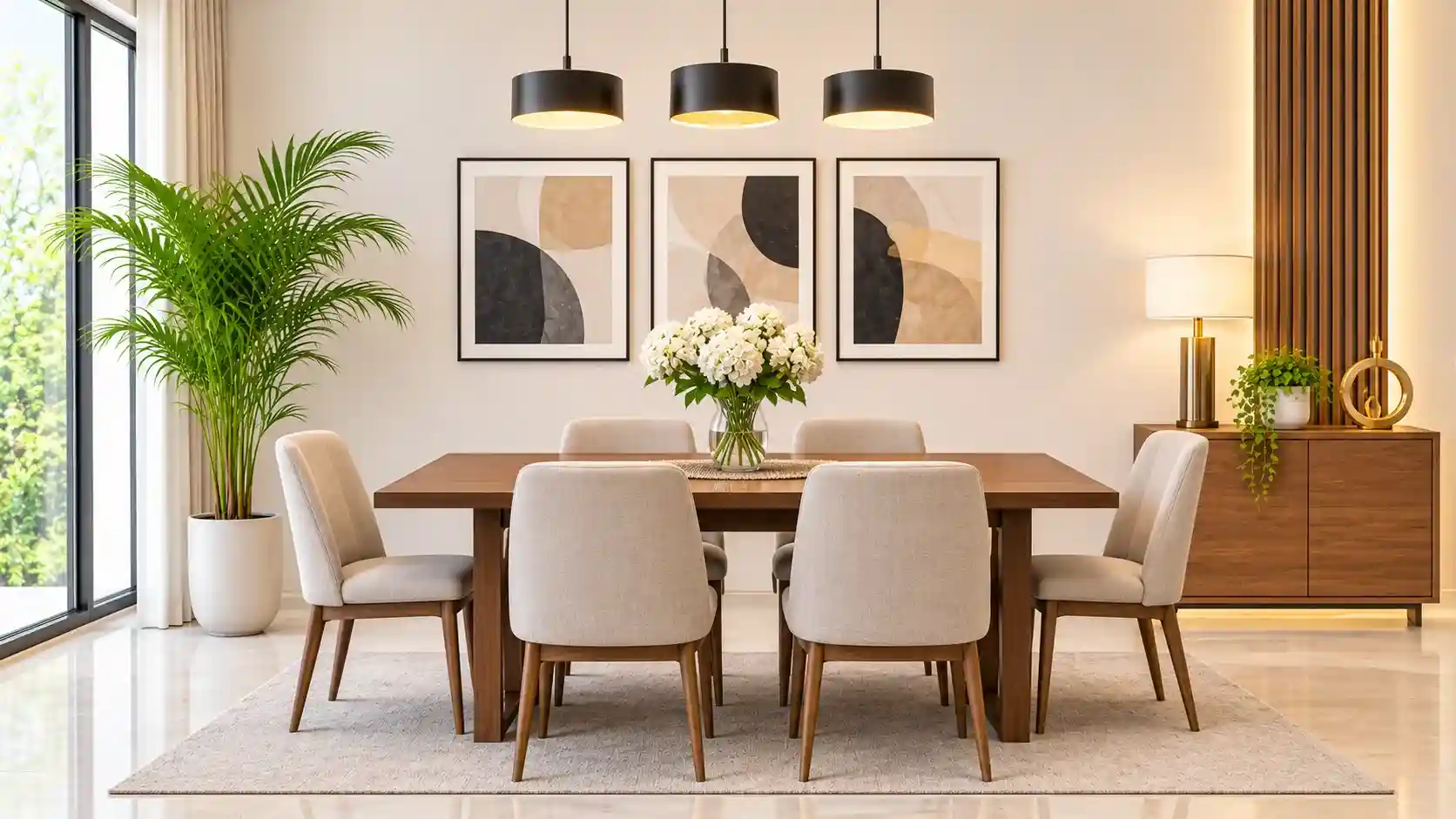
20 Modern Dining Room Ideas That Look Sharp and Feel Welcoming
A modern dining room can look great in a photo and still feel awkward at dinner. Hard chairs, a glossy table and bright ceiling light give you clean lines, but they can also make a meal feel stiff and echoey. Add a tight floor plan, and the chairs start knocking into walls and doors.

These Modern Dining Room Ideas aim for a room that looks current and still feels comfortable after an hour at the table. You will find choices for tables, seating, lighting, color, storage and open-plan layouts, with practical measurements so each idea can fit a real room, from a small apartment corner to a separate dining space.
20 Modern Dining Room Ideas for Rooms of Every Size
The strongest Modern Dining Room Ideas start with how the room is used, not with a mood board. Count how many people sit down on an ordinary evening, note where doors swing and decide which wall can carry storage or art. Then pick the two or three ideas below that fit, instead of copying the whole list.
1. Match the Table Shape to the Room Shape
A rectangular table suits a long, narrow room, a round table suits a squarer one, and an oval softens a rectangle’s corners where people need to pass close by. The Homes & Gardens 2026 dining room trends round-up, published in December 2025, lists a round table revival, and one designer in it credits the shape with inviting conversation because there is no head of the table.
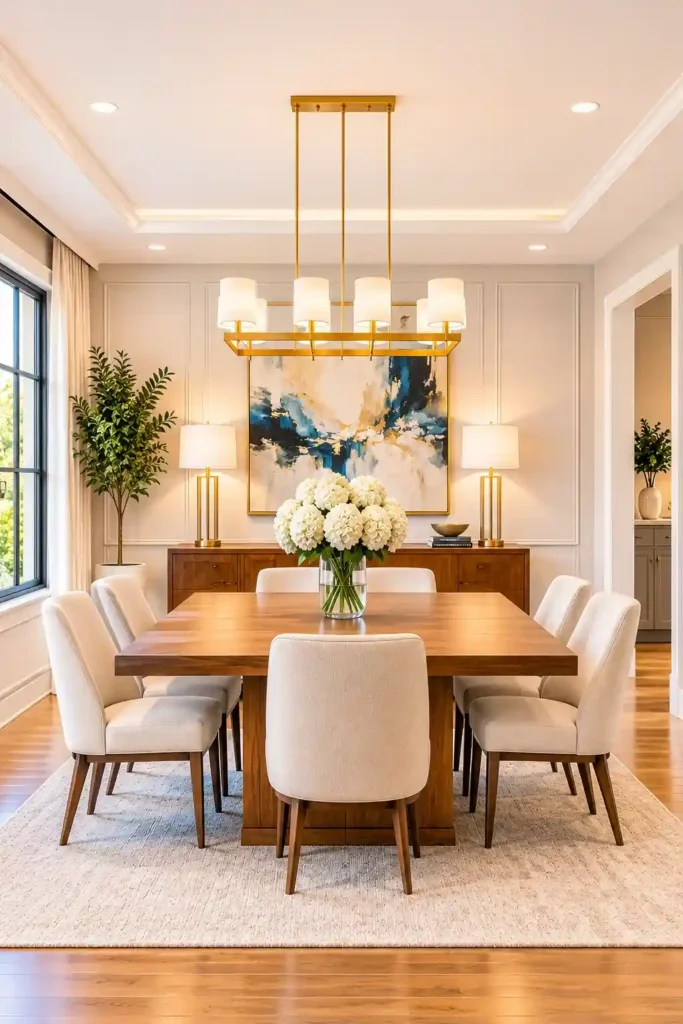
Check the numbers before you commit to a shape. A round table about 42 to 48 inches (107 to 122 cm) across usually seats four, and 54 to 60 inches (137 to 152 cm) seats six. For a rectangular table, Room & Board recommends 18 to 24 inches (46 to 61 cm) of table width per person, so a 72-inch (183 cm) table gives six people the full 24 inches each, three along each long side.
2. Choose a Pedestal or Trestle Base for Easier Seating
The base shapes how a table feels as much as the top does. A pedestal or trestle base removes the corner legs, so chairs can slide in anywhere and the ends of the table stay clear for an extra seat. Room & Board notes that pedestal bases can make it easier to fit chairs, and a single column also gives the table a clean, sculptural outline.

Check the base before you buy. A wide pedestal can still get in the way of knees on a narrow table, and a heavy trestle can clash with chair arms. Room & Board suggests leaving about 6 inches (15 cm) between chairs and table legs, so mark the base footprint on the floor with painter’s tape and test where each chair would sit.
3. Add a Banquette or Bench Along One Side
A banquette or built-in bench uses less floor than a row of chairs because that side needs no pull-out space. Among Modern Dining Room Ideas for compact rooms, it is hard to beat on space efficiency, and designers in the Homes & Gardens round-up say built-in seating paired with smaller bistro-style tables is becoming increasingly popular in kitchen nooks.
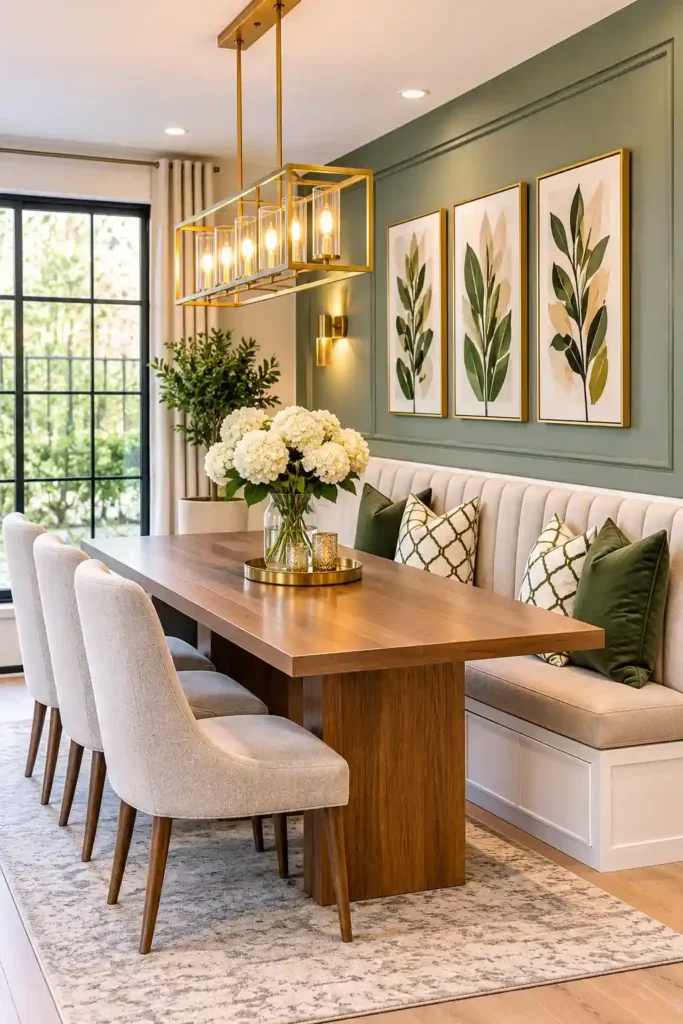
Pair the seat with a pedestal table so nobody has to straddle a leg. Room & Board points to pedestal bases as the more comfortable choice for banquettes. Keep the upholstery firm and wipeable, and consider a hinged seat that hides table linens or serving pieces underneath.
4. Mix Chair Styles Around One Table
A table with a full matching set can look predictable. Livingetc lists a wooden table with matching chairs among the dining room looks that no longer turn heads, and one of its examples uses chairs in several patterned fabrics that all stay within the same blue. Mixed seating gives a modern room character without adding clutter.
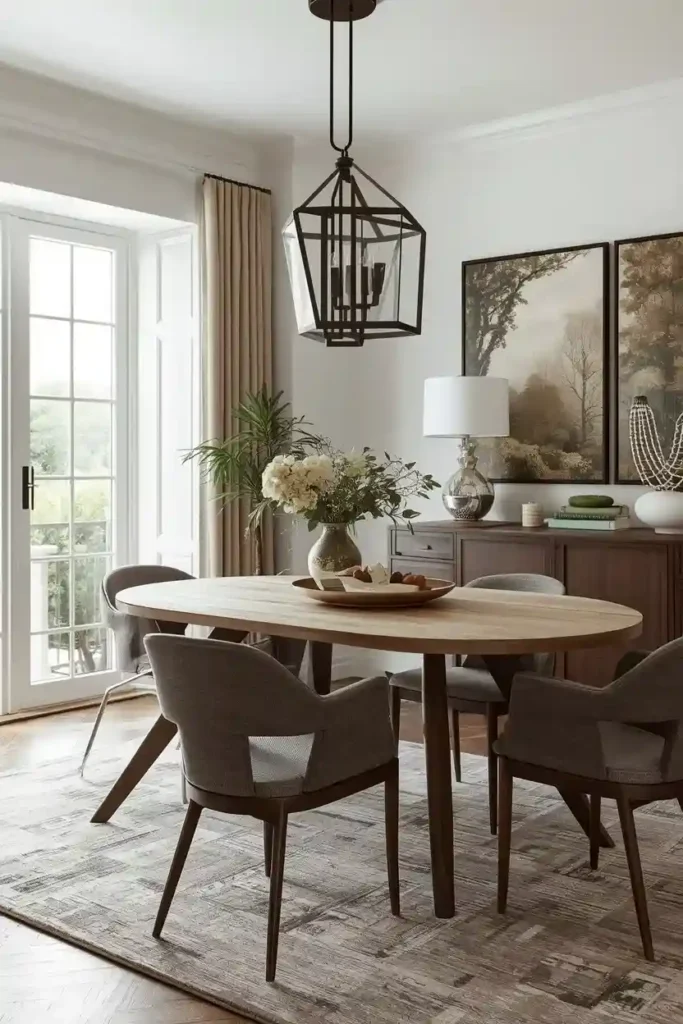
Keep one thing constant so the mix looks planned, such as the leg color, the fabric color family or the seat height. Two armchairs at the ends with armless side chairs along the sides is a simple starting point, and the armless chairs tuck under more easily in a tight room.
5. Choose Upholstery That Handles Real Meals
Upholstered seats are kinder over a long dinner, and the fabric also absorbs some of the echo that hard floors, glass and bare walls create. Fabric near food needs thought, though. A tightly woven performance polyester blend or leather wipes clean more easily than a looped bouclé, which can snag and hold on to stains.

Ask the seller for a swatch and the manufacturer’s cleaning code, then test a small piece with a damp cloth at home. In a house with young children, removable seat covers or washable seat pads save a lot of worry.
6. Pick a Tabletop Material for the Way You Eat
Wood adds warmth to a modern room, while quartz, stone and ceramic composite tops stand up well to busy households, as Room & Board notes in its dining room guide. Tempered glass keeps a small room feeling open because you can see through it, though it shows fingerprints and can scratch.

Name the material when you shop. Solid oak can be sanded and refinished, veneer over a core board can only take a light sanding, and laminate can chip at the edges and is hard to repair. Whatever you choose, ask about heat, stain and scratch resistance for that specific product, and use placemats under hot dishes.
7. Hang One Statement Light at the Right Height
Lighting does a lot of the visual work in Modern Dining Room Ideas, and one confident fixture is often enough. A sculptural pendant, a linear fixture or a cluster of small drops can anchor the table. A common guideline is a fixture about half to two thirds the width of the table, with a linear light or two or three smaller pendants over a long rectangular one.

Hang the bottom of the fixture about 30 to 36 inches (76 to 91 cm) above the tabletop so diners can see across the table. Room & Board uses 30 inches as its benchmark. Center the light over the table rather than the room, and have an electrician check the ceiling box and wiring before anything heavy goes up.
8. Layer Warm Light With Wall Lights and a Dimmer
A single bright ceiling light flattens a dining room. Add wall lights, a picture light over the art or a lamp on the sideboard, and put them on dimmers so the room can move from homework in the afternoon to candlelight at night. The Homes & Gardens round-up describes 2026 dining room lighting as warmer and softer than the bright, even glare of past years.

Use bulbs of the same warm color temperature throughout. Around 2700K is what most people prefer for dining rooms, according to Energy Trust of Oregon, and one cooler bulb among them stands out immediately. Check that LED bulbs are rated dimmable and suit your dimmer, and hire an electrician to add new wall lights or switches.
9. Build the Palette From Neutrals and One Accent
Modern does not have to mean white. Warm stone, soft greige or pale clay on the walls gives you a calm base, and one accent color can carry the personality through chairs, a rug or a single piece of art. The room stays easy to change later because the accent lives in movable pieces rather than paint.

Color shifts with light, so test a large sample on the wall and look at it in the morning and again in the evening. Most dining rooms are used after dark under warm bulbs, and that is when the paint matters most. Repeat the accent two or three times around the room so it reads as a choice and not an accident.
10. Go Dark With Deep Green or Blue Walls
Deep color is one of the boldest Modern Dining Room Ideas, and the dining room is a good place to try it. Most meals happen in the evening, and designers in the Homes & Gardens round-up describe a move toward moodier dining rooms because nobody has to live in a dark space all day. Deep green, ink blue or dark brown can make a pale table, light chairs and warm lighting stand out.
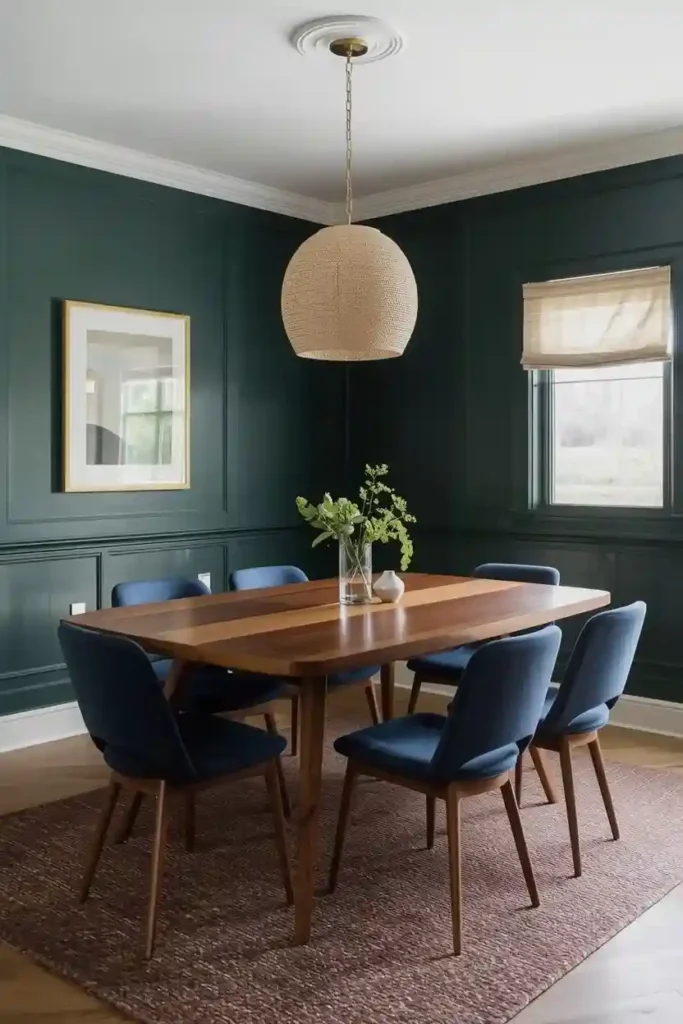
Choose a washable matt or eggshell finish, since dark walls show scuffs and glossy paint exposes every flaw in the plaster. Test samples on two walls, because a window wall and a shadowed wall will look quite different. Pair the color with a light rug or pale chairs so the room keeps some contrast.
11. Warm Up Hard Lines With Natural Wood
A modern room made only of glass, paint and metal can feel cold. Wood brings grain, warmth and a softer visual weight. Oak and ash read lighter and calmer, while walnut looks richer, and one designer in the Homes & Gardens round-up lists walnut tones among the finishes expected in 2026 dining rooms.

You do not need to match every piece. Choose one main wood for the table or sideboard, repeat it once or twice in smaller items, and let other surfaces stay painted or upholstered. Compare the undertones in your own light before buying, since a yellow-toned oak and a red-toned walnut can fight each other on the same floor.
12. Add Slatted or Fluted Wood Paneling
Vertical slats or fluted panels give a flat wall depth and shadow without adding pattern. One designer in the Homes & Gardens round-up expects richer, more architectural dining rooms, with paneled walls, plaster finishes and statement millwork. On a modern scheme, keep the lines straight and the spacing even so the paneling reads as texture, not tradition.
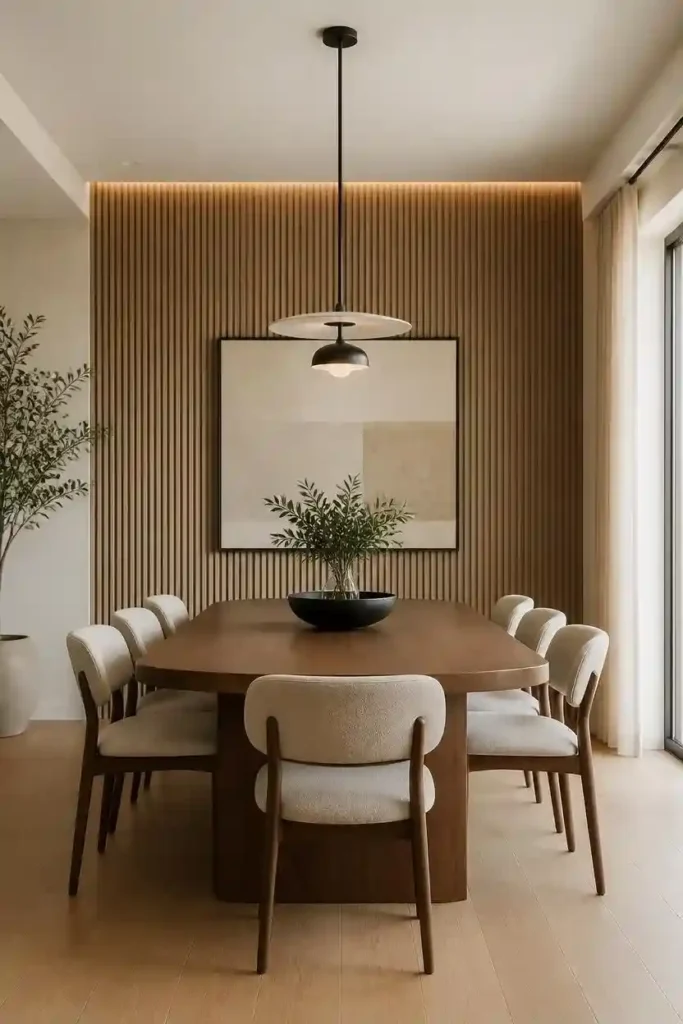
Panel the wall behind the sideboard or the long wall opposite the window rather than all four walls, so the room does not feel boxed in. Some slatted panels come with an acoustic felt backing, so check the manufacturer’s specifications if echo is a concern. In a rental, ask the landlord first, or look at freestanding slatted screens that need no fixing.
13. Add a Shallow Sideboard for Storage
A sideboard earns its place in many Modern Dining Room Ideas because it gives plates, linens and serving pieces a home away from the table. Ideal Home notes that contemporary sideboards look very different from the heavy ones many people grew up with. Look for flat or fluted fronts, slim legs or a wall-hung design so the piece feels light.
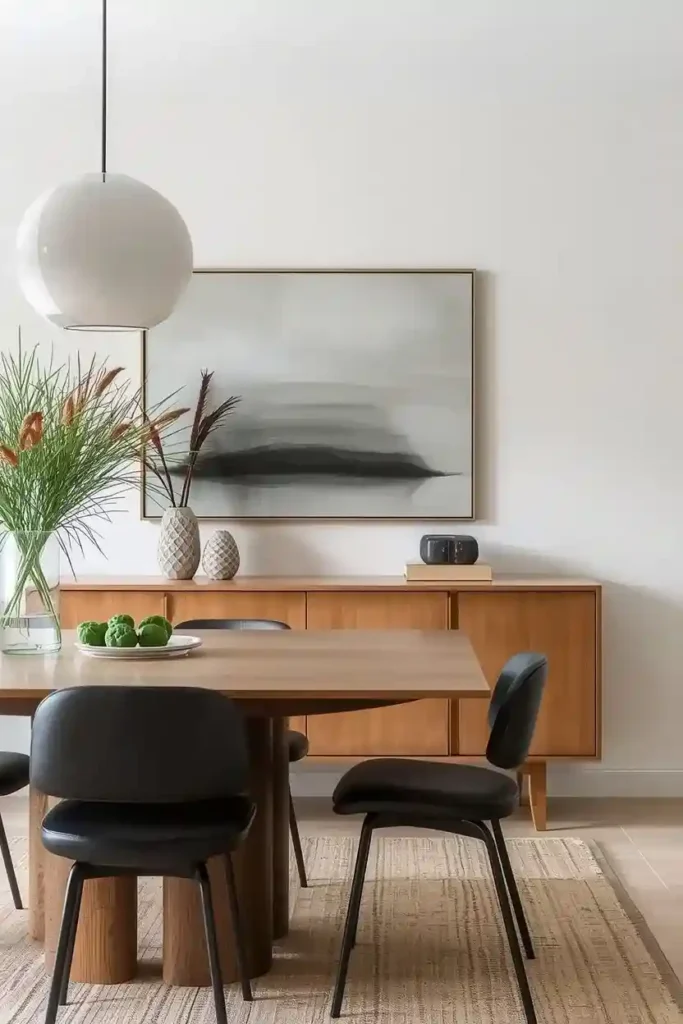
Depth matters more than length. Room & Board advises at least 36 inches (91 cm) behind chairs and up to 54 inches (137 cm) near storage pieces and busy areas, so measure with the chairs pulled out before you choose. In a tight room, a shallow cabinet or a wall-mounted console may be the only option that keeps the walkway clear.
14. Use Open Shelving or a Display Niche
Open shelves or a recessed niche let you show a few good things, such as ceramics, glassware or a stack of cookbooks, instead of hiding everything behind doors. In a modern room, restraint is the point. Leave part of each shelf empty and group objects by height and color so the wall looks edited, not full.
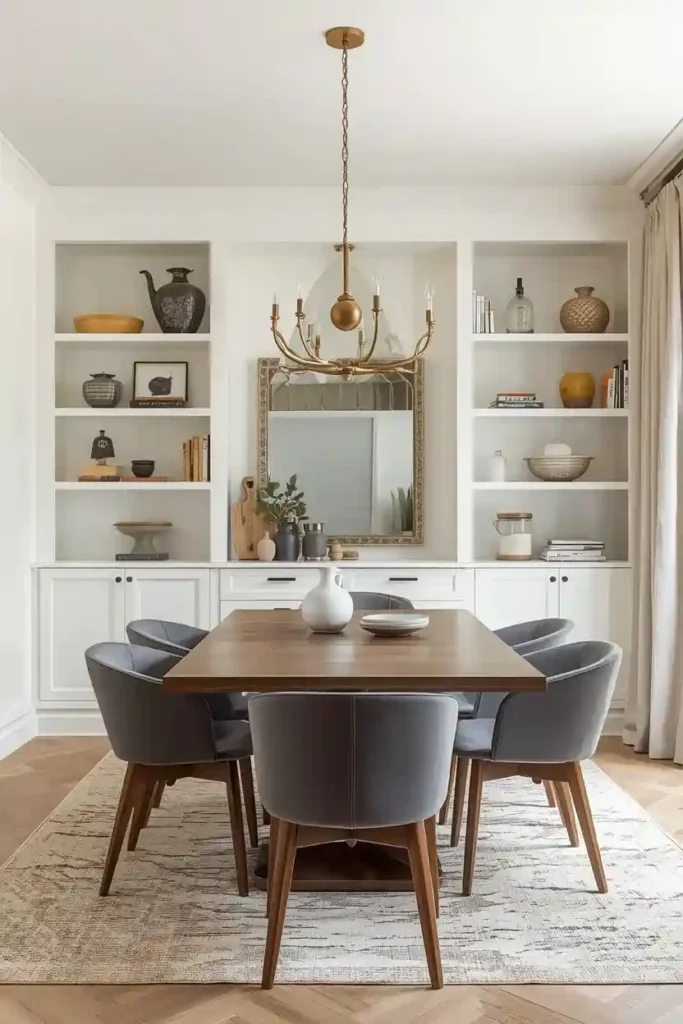
Plan the shelves around what you actually use. Glassware and serving bowls that come out for dinners earn their place better than decorative objects that only collect dust, and a closed cabinet below can hide the less attractive items. Fix shelves into studs or use anchors suited to the wall type, because ceramics and glass add up in weight. Our kitchen styling ideas use the same approach for open kitchen shelves.
15. Size the Rug So the Chairs Stay On It
A rug anchors the table and softens sound, but only if it is large enough. Room & Board recommends the rug extend at least 24 inches (61 cm) past the table edge, and oversized chairs may need more. When the rug is too small, chair legs catch on the edge every time someone sits down.
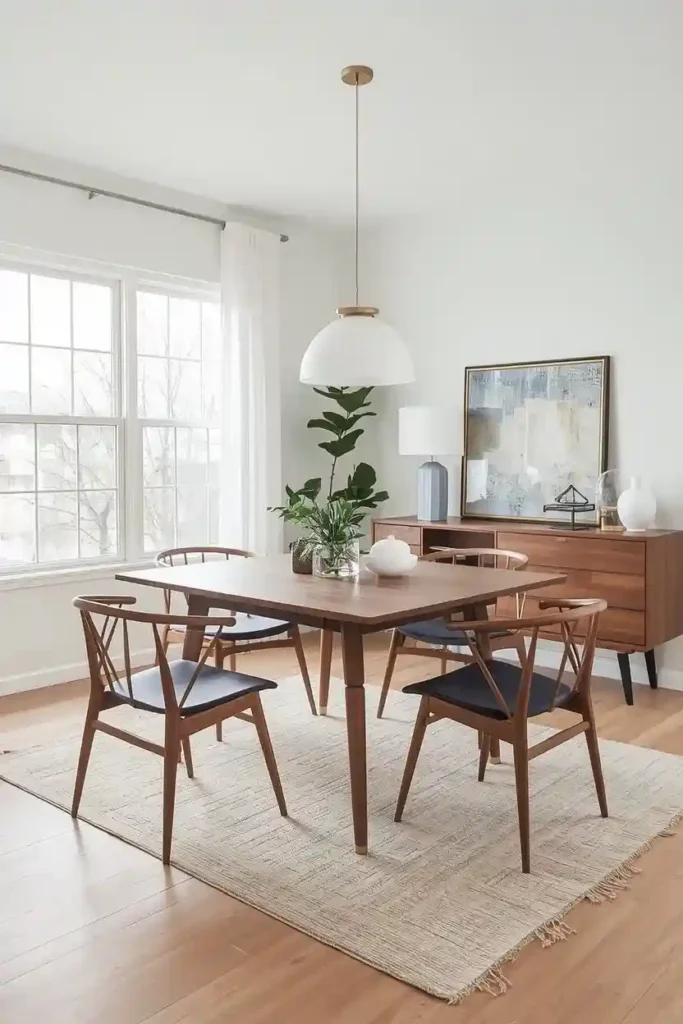
Choose a flatweave or low-pile rug. Chairs slide more easily, crumbs are simpler to vacuum and spills sit on the surface instead of sinking into deep fibers. Add a thin rug pad so the rug stays put, and pick a color or muted pattern close to your floor tone if you want it to hide small marks.
16. Hang One Large Artwork Instead of a Busy Gallery Wall
One oversized piece gives a modern dining room a clear focal point and keeps the wall calm. Art that spans roughly two thirds of the width of the sideboard below usually looks balanced, and a single frame avoids the visual noise of several small ones competing with the table.
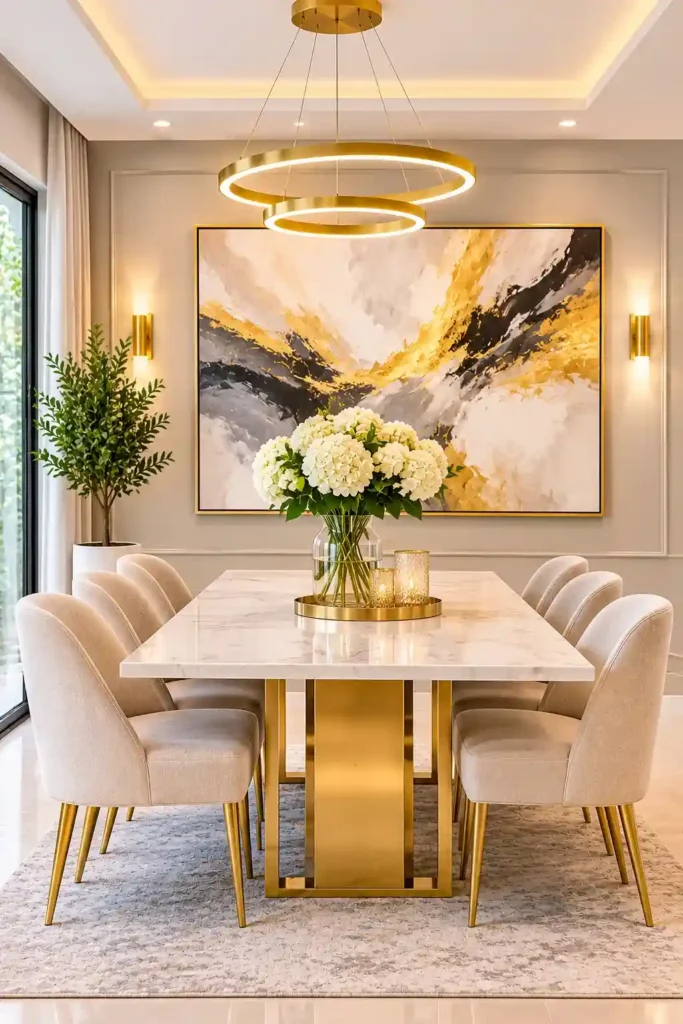
Hang it with the center around 57 inches (145 cm) from the floor, the height galleries commonly use, and keep the bottom edge about 6 to 8 inches (15 to 20 cm) above the sideboard. Most people hang art too high, so sit at the table and check the position before you drill. Use wall anchors rated for the weight of the frame.
17. Use a Large Mirror to Bounce Light
A large mirror can make a small or dim dining room feel brighter and wider. It needs no extra furniture, so it suits Modern Dining Room Ideas for compact rooms especially well. A round or tall rectangular mirror with a slim frame suits modern lines.
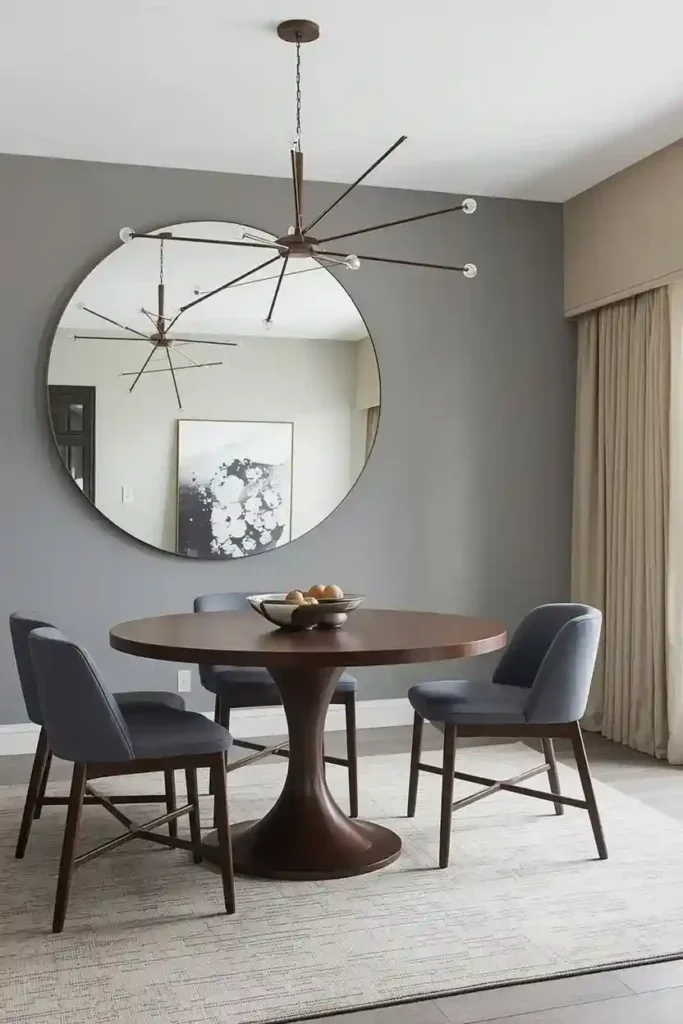
Place it where it catches daylight, usually on a wall beside or opposite a window. Check what it will reflect before you drill, because a mirror facing a cluttered counter or a bare bulb will double the problem. Use wall fixings rated for the mirror’s weight, and ask a professional to hang anything very large.
18. Soften Windows With Sheers and Simple Curtains
Bare windows and hard surfaces can leave a dining room echoing and glaring, especially when low morning sun hits the table. Sheer panels diffuse daylight, and plain full-length curtains can be closed in the evening for a warmer, quieter room. A flat panel or a simple pleat keeps the look modern.

Hang the rod high and wide, close to the ceiling and a little beyond the window frame, so the window looks larger and the curtains clear the glass when open. Let them just touch the floor or stop a fraction above it. Linen and linen blends hang well, and a lined curtain blocks more light and absorbs more sound than an unlined one.
19. Define the Dining Zone in an Open-Plan Room
Modern Dining Room Ideas for open-plan homes work best when the zone feels intentional without walls. A rug, a pendant light and a sideboard or low bookcase behind the chairs can mark where dining starts. If you are also planning an island, our kitchen island ideas cover how to size one around movement and seating so it does not crowd the table.
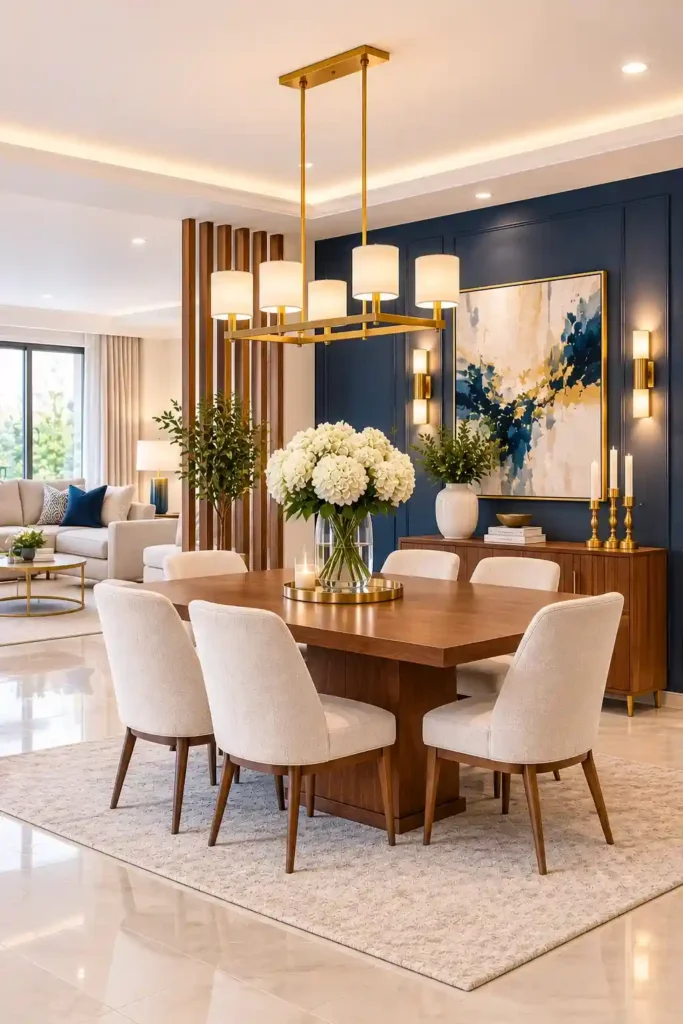
Keep finishes in the same family across both zones, with one repeated metal tone, a shared wood or a matching accent color, so the space reads as one home. For finish ideas that carry from the kitchen into the dining area, our kitchen trend ideas help you compare current materials and forms before you commit.
20. Make the Table Work for More Than Meals
Many homes need the dining table to double as a desk, a homework spot or a craft surface. The Homes & Gardens round-up says the multi-purpose dining room is continuing into 2026, with work zones, books and built-in storage layered into the room as homes prioritize flexibility, especially in smaller footprints.
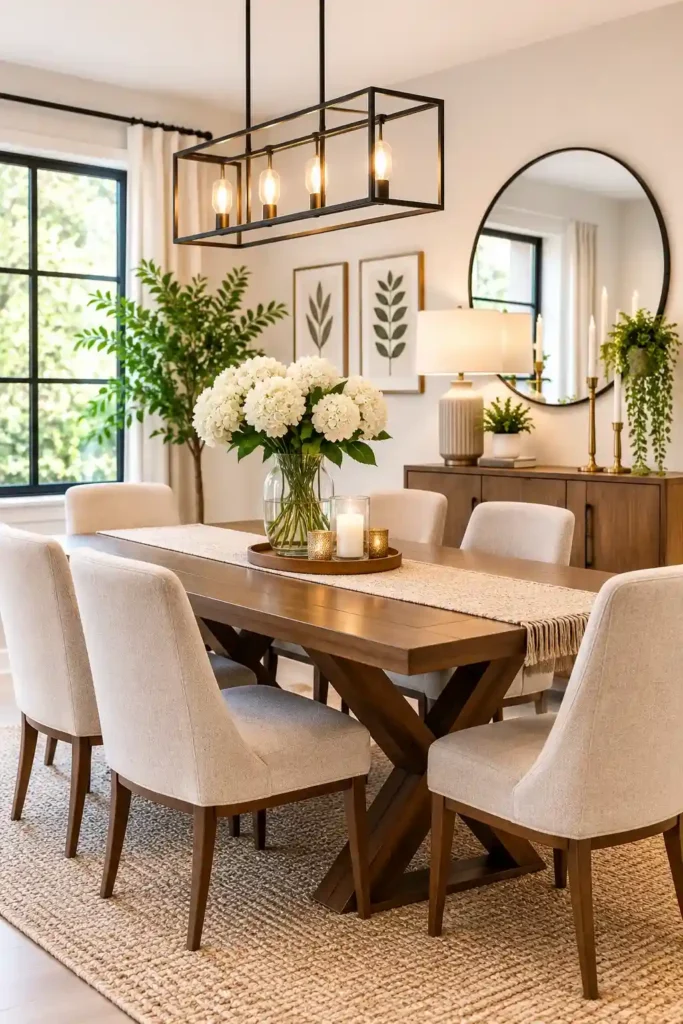
Pick a tabletop that tolerates daily use, such as sealed hardwood, quartz or ceramic composite. If you choose an extendable table, buy the smallest base size that seats your everyday group and extend it only for guests. Plan charging points and lamp power with an electrician instead of running cords across the floor, and keep a closed cabinet nearby so laptops and school supplies can be cleared before dinner.
Measurements to Check Before You Buy
Before you buy anything for these Modern Dining Room Ideas, measure the room and the furniture with the chairs pulled out. The figures below are common starting points from Room & Board and other design retailers, so adjust them for your own chairs and walkways.
| What to measure | Starting point |
| Space behind seated chairs | At least 36 inches (91 cm), up to 54 inches (137 cm) near storage or busy walkways |
| Table width per person | 18 to 24 inches (46 to 61 cm) |
| Table depth | About 30 to 36 inches (76 to 91 cm) is common, and more depth leaves room for platters |
| Rug beyond the table edge | At least 24 inches (61 cm), more for oversized chairs |
| Pendant height above the table | About 30 to 36 inches (76 to 91 cm) |
| Pendant width | About half to two thirds of the table width |
Mark these distances on the floor with painter’s tape and stand in the space with a chair or two. If a measurement feels tight in tape, it will feel tighter once the table, people and dishes are in place.
Conclusion
The best Modern Dining Room Ideas do not depend on one look. They size the table to the room, give people comfortable seats, light the table warmly and add storage, color and texture in ways that suit daily use. Start with the measurements, then add natural wood, soft fabric and one bold choice you will enjoy at the table, and the room will feel modern without feeling cold.

FAQs
What makes a dining room look modern?
Simple shapes, uncluttered surfaces, a limited palette and a few well-chosen materials usually do most of the work. One confident feature, such as a sculptural pendant or an unusual table, gives the room a focal point, and warm lighting and natural textures stop the simplicity from feeling cold.
What colors work best in a modern dining room?
Warm neutrals such as soft white, stone and greige are dependable, and deep green or blue suits a room used mostly in the evening. Test large samples on the wall and look at them in both daylight and lamplight before you paint.
How much space do I need around a dining table?
Allow at least 36 inches (91 cm) behind seated chairs, and up to 54 inches (137 cm) near storage pieces or busy walkways, as Room & Board advises. If a doorway or cabinet door opens into that space, add extra room.
Which Modern Dining Room Ideas suit a small room?
A round or pedestal table, a banquette along one wall, a large mirror and a shallow sideboard use limited space well. Keep the palette light or commit to one deep color, and avoid several medium-sized pieces that break the room into fragments.
Should dining chairs match the table?
No. A matching set is safe but predictable. Mixed chairs look planned when one element stays the same, such as the leg color, the fabric color family or the seat height.

2 Comments